REVIEW: Compliance

COMPLIANCE_body

Compliance
Directed by: Craig Zobel
Written by: Craig Zobel (screenplay)
Starring: Ann Dowd, Dreama Walker, Pat Healy and Bill Camp

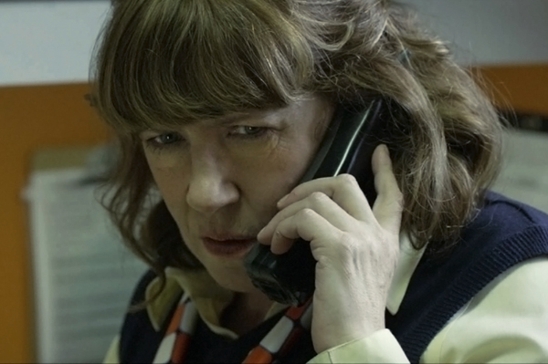
Compliance is so bad that I hesitate even writing about it.  It is filled with such an entitled sense of purpose and meaning that the cruel sexist joke it ends up becoming is all the more disheartening.  Supporters of the film will have you believe that because it is based on “true events” that its morality is somehow less disturbing.  To them I would say: The Blind Side.

Craig Zobel, the writer and director of this movie, knew exactly what he was doing.  In portraying an infamous fast food prank call caught on security cameras where a manager talks with an alleged police officer and obeys his every whim, he ends up illustrating a sadistic fantasy under the guise of morality.  Sandra (Ann Dowd), a middle-aged manager at the fictional fast food chain Chick-Wich, is the principle woman on the other end of that phone.  A man posing as a police officer (Pat Healy) calls her claiming that one of the cashiers (Dreama Walker) was caught on camera stealing from a customer’s purse.

Continue reading

BEST PICTURE NOMINEE: Django Unchained

url

Django Unchained
Directed by: Quentin Tarantino
Written by: Quentin Tarantino (screenplay)
Starring: Jamie Foxx, Christoph Waltz, Leonardo DiCaprio and Kerry Washington

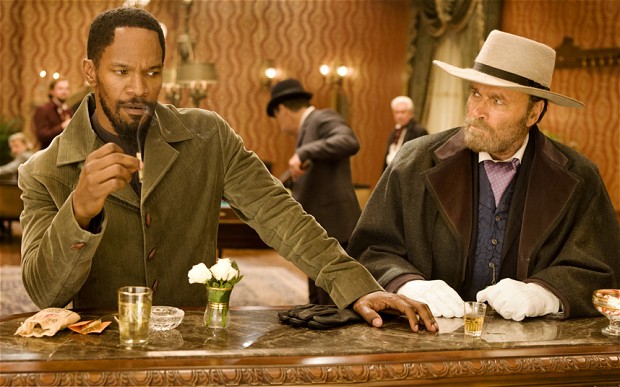
Django, like the ‘D’ at the beginning of his name, is silent.  This is no small feat, given that he is the main character in a Quentin Tarantino movie, and should be stopping to yak at any given opportunity, preferably before a burst of ultra-violence.

Of course there is plenty of bloodshed in Django Unchained, so much in fact that it paints a white plantation red, mostly with the blood of its owner and his employees.  It is Tarantino’s second historical revenge fantasy in a row, following the revisionist WWII epic Inglourious Basterds.  Here, though, he crucially refuses to revise the horrors of American slavery, and depicts them in ways that are startling and horrific.  The blood from the shootouts may be gratuitous and expressionistic, but it’s the beating, dog mauling and whipping that feel brutally real even if the movie they are in is often highly stylized.

Continue reading

The Fine Line: How the Oscars subdue controversy by embracing it

Picture 11

Looking through the latest score of Oscar nominees, it’s difficult not to be a little bit happy. Eight of the nine nominees for Best Picture actually sort of deserve to be there, as do most of the acting nominees.  It’s actually difficult to pinpoint the greatest surprise success, though you’d have a hard time arguing that it’s not either Michael Haneke’s Amour and Benh Zeitlin’s Beasts of the Southern Wild.  Both of these films “stole” Best Director nominees from the likes of Quentin Tarantino, Kathryn Bigelow and Ben Affleck, though we named them as the two best movies of the year.

However, the Oscars have slowly been dwindling further into mediocrity long before the Academy switched their Best Picture policy to, “We’ll nominate however many goddamn movies we feel like” and kept the directing category limited at five nominees.  Looking at the past five years of winners, three of them (Slumdog Millionaire, The King’s Speech and last year’s The Artist) were the un-upsetting crowd-pleasers of their respective year.  The other two (No Country for Old Men and The Hurt Locker) were technical masterworks deserving of the kind of pedigree the Oscars are supposed to represent.

Continue reading

BEST PICTURE NOMINEE: Life of Pi

life_of_pi_still

Life of Pi
Directed by: Ang Lee
Written by: David Magee (screenplay), Yann Martel (book)
Starring: Suraj Sharma, Irrfan Khan, Rafe Spall and Gérard Depardieu

Because of the horrendously vague marketing campaign, the only draw to Life of Pi for me was the Ang Lee directing credit.  Though Lee’s directing career includes some misses (Taking Woodstock, Hulk) he is a master storyteller and when he’s on (Brokeback Mountain, The Ice Storm) few contemporary filmmakers can touch him.

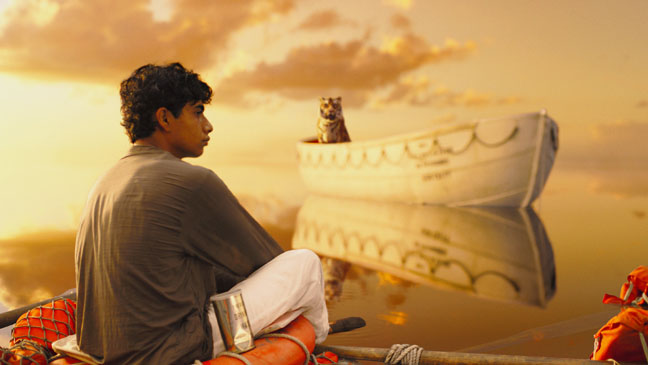
Life of Pi is neither masterwork nor miss.  It is, however, a stunningly gorgeous movie about survival at sea, and all the problems and symbolism that entails.  An inquisitive young boy named Pi (Suraj Sharman) is moving away from his home in India with his family to escape mounting political tensions.  The ship is caught in a storm and sinks.  Pi and four animals from his family’s zoo stowaway on a life boat and drift across the Pacific.

Continue reading

BEST PICTURE NOMINEE: Beasts of the Southern Wild

Beasts of the Southern Wild - 6

Beasts of the Southern Wild
Directed by: Benh Zeitlin
Written by: Benh Zeitlin & Lucy Alibar
Starring: Quvenzhané Wallis, Dwight Henry, Levy Easterly and Lowell Landes

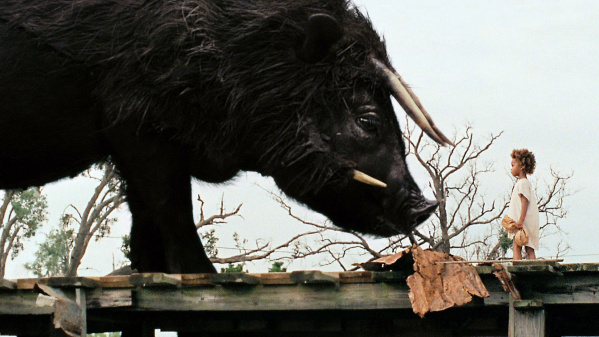
Since Beasts of the Southern Wild was my pick for the best movie of 2012, I thought I would revisit it here since my original review was an ecstatic, somewhat over-the-top reaction from the Cannes Film Festival.  Having seen the film twice now, I still maintain that it is a masterpiece, and one of the best translations of childhood consciousness that I’ve ever seen in a movie.

Many of the criticisms of Benh Zeitlin’s debut feature revolve around its treatment of race as it relates to poverty.  The harshest (and most recent) of these comes from Richard Brody of The New Yorker, who wrote:

The movie itself is this year’s The Help, a romanticized and mythologized vision of poor Southern blacks (in this case, a father and daughter in a Louisiana bayou community called the Bathtub) that also sentimentalizes the very notion of self-help (“The Self-Help”) in a story that spotlights a tough, poetic, independent-spirited child facing dangers in aquatic adventures.

Continue reading

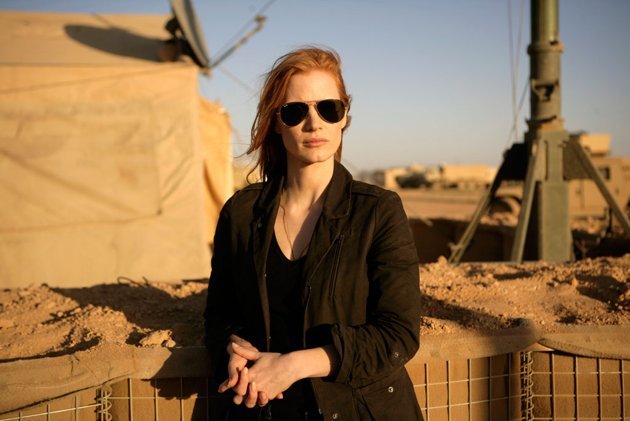
BEST PICTURE NOMINEE: Zero Dark Thirty

DARK-THIRTY-3

Zero Dark Thirty
Directed by: Kathryn Bigelow
Written by: Mark Boal (screenplay)
Starring: Jessica Chastain, Jason Clarke, Jennifer Ehle and Joel Edgerton

In 2008’s The Hurt Locker, director Kathryn Bigelow and screenwriter Mark Boal created a searingly suspenseful modern war movie about a bomb diffuser addicted to the rush of potential detonation, which became a history-making Oscar and critical darling in the process. It was a grimy and unsanitized piece of work, more obsessed with masculinity on the edge than serving up an overt political agenda.

Zero Dark Thirty is almost clinical by comparison, if no less nerve-wracking.  In chronicling the obsessive decade-long manhunt for Osama bin Laden, Boal and Bigelow re-examine the American psyche on a much broader scope.  Again they try to keep an agenda out of it and simply dramatize the facts, but the sensitivity and  weight of those findings make it impossible to avoid controversy.

Continue reading

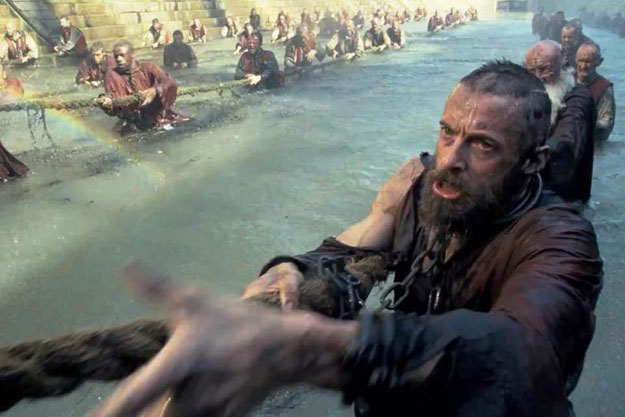
REVIEW: Les Miserables

MISERABLES-articleLarge-v3

Les Misérables
Directed by: Tom Hooper
Written by: William Nicholson (screenplay), Herbert Kretzmer (lyrics), Victor Hugo (novel)
Starring: Hugh Jackman, Russell Crowe, Anne Hathaway and Amanda Seyfried

When I originally saw Les Misérables, I was so disheartened and uninspired  that I didn’t even want to write down any thoughts about it.  Anne Hathaway was great, yes.  At times the raw combination of extended takes done in close-up and live singing from the performers was thrilling.  But the movie was bloated, sloppy and completely overdone.

Having not seen the stage musical or read Victor Hugo’s gargantuan novel, I came to the material with completely fresh eyes.  It begins with a sweeping, artificial-looking descent into a 19th century French work camp, where Jean Valjean (Hugh Jackman) is completing a 20 year work sentence for stealing a loaf of bread for his family.  He is overseen by Javert (Russell Crowe), a ruthless, incredibly narrow character whose sole pursuit throughout the movie is to show up conveniently at any given scenario where Valjean is present and make him squirm.

The movie hinges on their incredibly poorly realized relationship and countless manipulative emotional tangents.  Les Misérables seems to operate with the understanding that it deserves every wrenching, song-driven outburst without the slightest bit of narrative coherence.  More so than director Tom Hooper’s previous Oscar-baiting effort The King’s Speech, it is a deliberate ploy to earn trophies with period costume design and unearned emotional response.

As grimy and desperate as Jackman appears and as surprisingly good as Crowe’s singing voice is, the movie is punishing.  It peaks less than an hour into its two-and-a-half hour run time with Hathaway’s take on I Dreamed a Dream,” where her downtrodden prostitute Fantine weeps for her ruined life after she’s sold her hair and teeth to support her daughter.  Shot in a single take like several of the other numbers, it is a very good illustration of what Hooper occasionally does very well and often does very poorly with this material.  The close-up of Hathaway’s face is effective precisely because it seems unable to contain her emotion, and because her singing is raw.

les-miserables-trailer-uk

Jackman’s Valjean, on the other hand, does not have the luxury of being an effective character in close-up.  He is often on the move evading the authorities or trying to rescue and care for Fantine’s daughter Cosette (Isabelle Allen as a young girl and Amanda Seyfried as a young woman), but the constraints Hooper placed on the musical demand that he must capture the singing live, and gets the camera in obsessively close to highlight just how live and strained his performers are.

This would be an admirable effort if the movie wasn’t such a blatant grab at awards.  Despite the desperate hearts at its core, it is exhausting not because the story is effective but because it isn’t.  It jumps ahead years at a time, stopping for revolution and love but never expanding or really caring about them.  The music often adds nothing to a scene, and despite coherent, elaborate costume choices and set design it never transports you.  Above all else, Les Misérables is the triumph of artifice over feeling and entitlement over storytelling.

Grade: D

REVIEW: Promised Land

promisedland_620x350

Promised Land
Directed by: Gus Van Sant
Written by: John Krasinski & Matt Damon (screenplay), Dave Eggers (story)
Starring: Matt Damon, Frances McDormand, John Krasinski and Rosemarie DeWitt

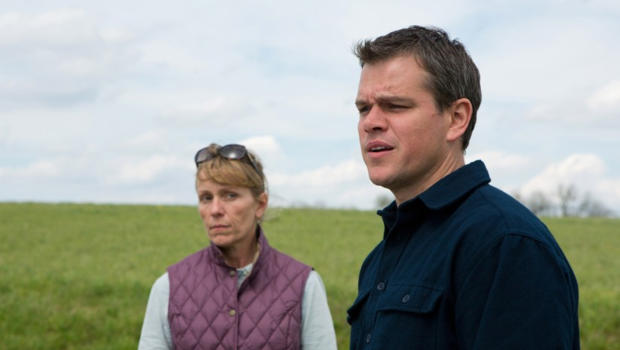
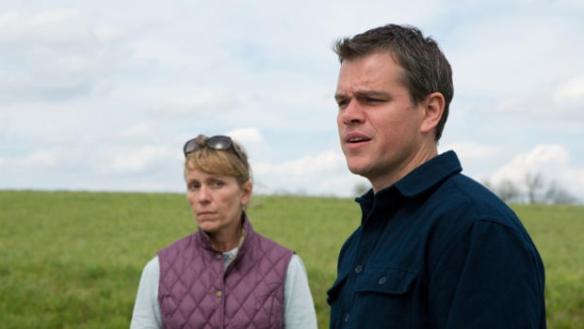
Promised Land is a message movie about fracking just like it was marketed, but exactly what that message ends up being is somewhat surprising.  It’s more about the fading myth of small town life than it is about grandiose environmentalism, and its biggest asset is surely the atmosphere of the rural Pennsylvania town that representatives (Matt Damon and Frances McDormand) from the big, bad, generically-titled corporation Global descend upon to pluck up land on the cheap for digging.

There isn’t much blood in Gus Van Sant’s latest film, though, but there is quite a bit of swindling.  Damon and McDormand are two screen presences often associated with kindheartedness, which they subvert here in the way that they intend to manipulate the poverty of the town by putting on a smile and exaggerating the numbers.  One of the best scenes in the movie comes toward the beginning, when they enter a convenience store on the outskirts of their target town to try and attempt to dress the part (they buy flannel shirts).

What Promised Land does exceptionally well is embed us in the ebb and flow of small town life with tactful, precise observations.  From a bar competition where outdrinking the bartender earns free drinks for everyone to holding town hall meetings in a gymnasium before the varsity basketball game, Van Sant expertly illustrates not just modern rural America, but also the presence outsiders have on it.

promised-land-movie

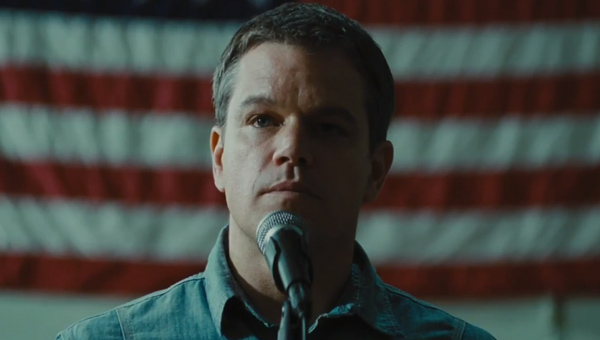
Steven (Damon) spends most of the movie trying to use the town’s charms and habits against it.  This becomes more evident when an environmentalist (John Krasinski, who co-wrote the script with Damon) shows up to vie for the town’s affections before the town votes on whether or not to support Global’s fracking invasion.  The script mostly avoids grandstanding and preaching, and though it is clearly against the controversial drilling practice, the allure of money in tough economic times is undeniable.

Because the movie’s stance on the issue evolves and expands with Steven, it’s mostly about reconciling what he does for a living with whether or not he can live with himself.  The answer to that questions is fairly obvious if you’ve seen a movie before, but for the most part it avoids manipulating emotion and condescending to intelligence like its main characters do.

Van Sant is good at balancing the naturalistic acting from all the performers with his knack for visual detours to give us a break from their talking.  He is a director who, like Steven Soderbergh, oscillates between bigger, studio-backed endeavors like Milk and Good Will Hunting to lower budget indies like Elephant and Paranoid ParkPromised Land, with its big marquee names and its overtly didactic premise, is definitely more of the former.

This isn’t to say that should be held against this movie.  Van Sant has made great movies of all sizes, which makes his directorial touch somewhat illusive.  Here it can be found in the time lapses in a diner and the slow motion pan of a little league pitcher to reveal Global’s logo on the back of his uniform.  Promised Land is not a great movie, but it is assured and at times surprising in its tackling of the issue at its center.

Grade: C+
Our Favorite Movies of 2012

boat

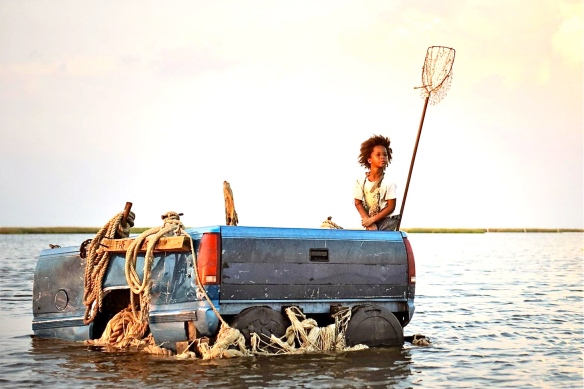
1.  Beasts of the Southern WildNo matter how skilled a filmmaker is, rarely does a movie come along that creates a cinematic world that is seething with a new kind of life, a world or vision that movies haven’t seen before.  Director Benh Zeitlin, working with a do-it-yourself low budget commune of filmmaking talent and some extraordinary “non-professional” performers, does that with Beasts of the Southern Wild.  The ferocious story of Hushpuppy (the amazingly talented child actress Quvenzhané Wallis) and her small, increasingly hopeless village on the other side of a Louisiana levee is filled with fantastical, visually stunning sequences as well as low budget narrative economy.  It is this year’s biggest contradiction, and its biggest success.

amour

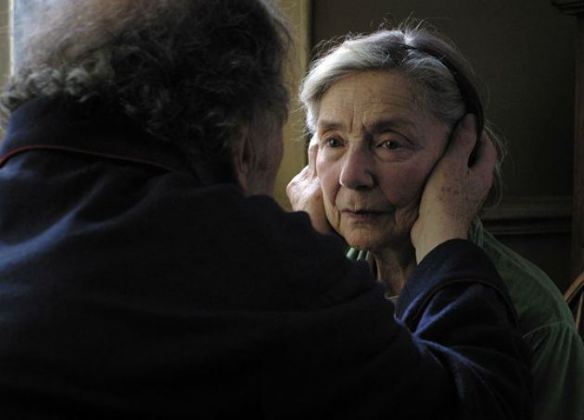
2. Amour– Michael Haneke’s second movie in a row to win the Cannes Film Festival’s highest honor (the Palme D’or) is the director’s most empathetic and devastating work to date.  As the camera lingers in the apartment of Georges and Anne (legendary French performers Jean-Louis Trintignant and Emanuelle Riva in devastatingly good form), we become privy to the elderly Parisian couple’s tender, haunting final moments together.  It is a slow crawl toward death, absent plot twists or Haneke’s sadism.  Watching it yields no pleasure, but everything from the incredible performances to the wonderfully precise camera movement lingers long after the movie ends.

Continue reading

Our Favorite Performances of 2012

072712-the-master

1. Joaquin Phoenix (The Master)- There must be something about Paul Thomas Anderson that gets such raw, elemental performances for his movies.  Phoenix, after his faux crazy odyssey, gives The Master such ferocious, filthy life that he managed to beat all the other fantastic roles this year, including the great Daniel Day-Lewis (who also gave Anderson an immortal performance in There Will Be Blood).

Day-Lewis_Lincoln_trailer.png.CROP.rectangle3-large

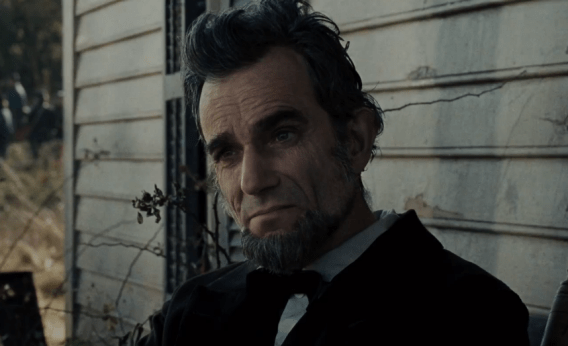
2. Daniel Day-Lewis (Lincoln)- Though Lincoln is an ensemble drama, it is built from the ground up around a character that needed to be reigned in and humanized.  Day-Lewis is not larger than life as our 16th president because that would’ve added layers of cheese to a movie that was already scored by John Williams.  His take on Lincoln often appears exhausted, both physically and emotionally, as he should be while overseeing the Civil War while trying to push through the 13th amendment to ban slavery and contend with family drama.

Emmanuelle+Riva+Amour

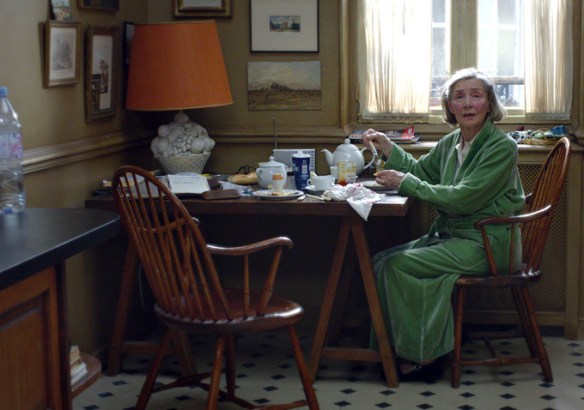
3.  Emmanuelle Riva (Amour)- The slow, ruthless decline of Anne during Michael Haneke’s Amour is essential to the movie’s success.  From her first, silent stroke at the breakfast table to her crippled, mangled body by the end, this is a performance that required great emotional honesty without overdoing it.  She gives one of the most wrenching depictions of hopeless, helpless illness ever.

Continue reading