Our Favorite Movies of 2011

1. The Tree of Life– Terrence Malick’s epic tone poem weaves in and out of the life of a typical American family in 1950s Texas, zig-zagging between the creation of the universe and the afterlife in the process.  By placing the location of his own childhood at the center of these celestial events, he puts a very personal spin on his warring perceptions of creation; the way of nature and the way of grace.  As his camera weaves in and out of the O’Brien family’s lives (a three son household run by Brad Pitt’s nature and Jessica Chastain’s grace), the element of visual improvisation makes their everyday life and afterlife beautiful.  Even if you hated it, you’ll never forget it. Read our review.

2. Certified Copy- Unexpected in every way, the romance film by Iranian director Abbas Kiarostami follows two strangers as they meet up in Tuscany one afternoon and divulge into their passionate opinions on art, originality, philosophy and love. Over the course of a single afternoon, their relationship takes twists and turns, leaving the audience in awe of the puzzle laid out before them and clinging to the aesthetic beauty of its settings and characters to reveal clues. Sophisticated filmmaking technique brilliantly interlaces heavy academic, multilingual conversation with a flowing narrative to sculpt this as one of the most unique and thought-provoking films of the year. Read our review.

Continue reading

Our Favorite Performances of 2011

1. Kirsten DunstMelancholia– In Lars von Trier’s apocalyptic new film, Dunst creates one of cinema’s most fully realized portraits of numbing depression.  In all of her performances, Dunst has shown a skill sometimes greater than the films she is in.  Here, she takes the role of Justine, a woman who self-destructs on her wedding night and takes shelter with her sister as the planet Melancholia goes on a collision course with Earth.  Key Scene: In the deepest part of her depression, Justine even needs help getting down to the dinner table.  Her sister Claire (Charlotte Gainsbourg) made meatloaf, her favorite dish.  When Justine tastes it, her face crumbles, and she says it tastes like ash.  That’s all that will be left of the planet in a couple days, and she can’t wait.

Continue reading

Debatable: Do most moviegoers dislike art movies?

Debatable, one of our newest series piloted earlier this year with a discussion on video-on-the-go, pins CyniCritics contributors together to tackle big picture movie-related topics through back-and-forth dialogue. The latest prompt asks editors if general movie audiences dislike art movies and if so, why.

Matt: I don’t think the “general public” is opposed to art movies in general. It’s mostly about distribution and marketing. The biggest marketing tool for successful art movies is the Academy Awards. However, the taste of Oscar voters leaves out many films that don’t fit into a specific mold or go too far away from narrative convention. That taste then translates to the public, who has limited choice and is more likely to look for stars or be influenced by a memorable trailer.

Luke: I think you bring up an interesting point with the Academy Awards as a marketing tool. There are countless art movies released in the year that find little commercial success until the holiday and awards season. Once the Academy, critics and marketing push a handful of “must-see” films, they start making a lot of money at the theaters because audiences feel these are good films they shouldn’t miss out on. No one would have seen Slumdog Millionaire without the buzz. Nominations and such also translate into good DVD rentals, which explains why Netflix’s top 10 rented movies are mostly Best Picture nominated films. Before then, people just don’t know what is good or don’t know how to find what is good and are too afraid to take a chance. This might explain why it’s easier to go see Mission: Impossible over Hugo. Continue reading

The 11 Best Movie Posters of 2011

After reading a few eye-rolling best movie posters of 2011 lists and questioning the rationalities behind fans and writers picking their favorite posters, I took the time to compile our own own list, putting two years of ad school skills with a fellow designer / colleague to practice. Here is a look at some of the best that came to mind. Honorable mentions: Bridesmaids, Scream 4, The Dark Knight Rises, Shame and Weekend.

11. The Run Diary: Commercially the long-awaited Johnny Depp film was a flop and critically it still disappointed. Most of the blame goes to marketing execs, who didn’t quite know how to sell the film despite a mildly attractive trailer and this copy clever typographical poster.

10. J. Edgar: Most might argue the other way on this, claiming Leo in an unflattering, oddly cropped portrait missed the mark, however, the still demands much attention and captures the character brilliantly. The hand-written signature title at the top quiets the image to match the tone of Eastwood’s film. Continue reading

SPOTLIGHT: Leonardo DiCaprio

One of the biggest box office cash-ins in Hollywood today is also one of the boldest talents.  The career of Leonardo DiCaprio has had many growing pains, but now that he’s grown up and knows exactly what he wants out of his career, he appears unstoppable.  His gift is to take us inside the often harrowing mind of the male psyche by manipulating and subverting the things that make people sympathize with it.  He often yearns for connection in his films, whether it be from an unrequited love (Inception, Shutter Island) or just a human to be normal around (The Departed), he takes us to these places with ferocious skill and unbreakable humanity.  Rarely does he crack a smile these days, but that makes them all the more meaningful when he does.  If there is any hope that the art house can continue to have a big budget, it’s because stars like him appreciate the art they work in, and not just the huge salary it gives them.

Continue reading

CLASSICS: Goodfellas

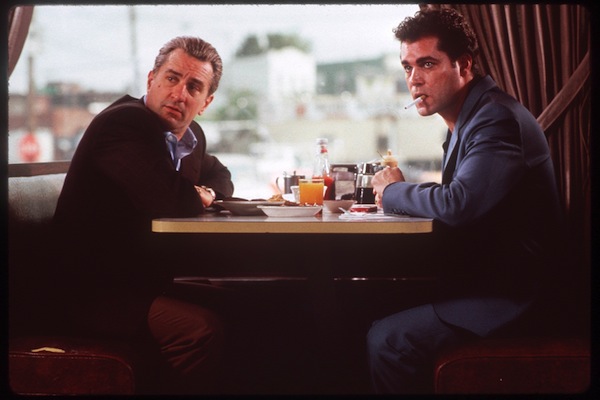
Goodfellas 
Directed by: Martin Scorsese
Written by: Nicholas Pileggi & Martin Scorsese (screenplay), Nicholas Pileggi (book)
Starring: Ray Liotta, Robert DeNiro, Joe Pesci and Lorraine Bracco

Goodfellas is a film in which everyone is doing the best at what they do best.  Alongside Taxi Driver, it is Martin Scorsese’s most undisputed masterpiece for several important reasons.  The most prominent reason is Scorsese’s technique, which is now one of the most easily identifiable “auteur” signatures.  From his use of rock music to the way his camera bobs, ducks and weaves alongside these mobsters, he defines the world they live in in almost every capacity.

Continue reading

Five grossly underrated horror films

Horror movies are very taste-specific because it’s difficult to scare a big group of people in the same way.  Some get freaked out by gore, others by the possibility of it.  Other times, all it takes is a m enacing villain calmly inching across the screen.  Here is a diverse list of movies that you may have overlooked in the sequel-driven, often scareless age of modern horror.

Let the Right One In The Twilight vampire bump actually worked against this movie, causing many fans of horror to stay away from anything with two fangs.  Add to that the fact that it’s also foreign, and it is further doomed in American markets.  Let the RIght One In is a profoundly disturbing adolescent horror film from Sweden, one where a seemingly young girl (brilliantly played by Lina Leandersson) becomes much more.  It’s artfully done, to be sure, but the blood-letting helps it fit in with grimier-looking horror movies.

Continue reading

CLASSICS: Broadcast News

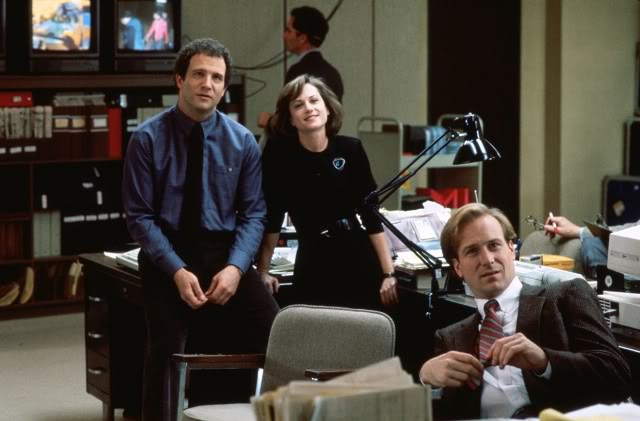
Broadcast News
Directed by: James L. Brooks
Written by: James L. Brooks (screenplay)
Starring: Holly Hunter, Albert Brooks, William Hurt and Joan Cusack

From a modern perspective, this monologue by Albert Brooks in the last third of James L. Brooks’ Broadcast News is cringe-inducing, because it became true:

“What do you think the Devil is going to look like if he’s around? Nobody is going to be taken in if he has a long, red, pointy tail. No. I’m semi-serious here. He will look attractive and he will be nice and helpful and he will get a job where he influences a great God-fearing nation and he will never do an evil thing… he will just bit by little bit lower standards where they are important. Just coax along flash over substance… Just a tiny bit. And he will talk about all of us really being salesmen. And he’ll get all the great women. ”

Continue reading

SPOTLIGHT: Kirsten Dunst

Kirsten Dunst is so much more than Mary Jane Watson.  Yes, Spider-Man’s muse is her most famous role, but Dunst gives terrific performances in several other lesser-known films.  She uses her expressive facial features to convey unbearable sadness as well as inescapable joy.  Though her career is thought to have ended when the Spider-Man franchise went up in flames after the third installment, she’s been doing some of the best work of her career since then.

Continue reading

CLASSICS: Pulp Fiction

Pulp Fiction
Directed by: Quentin Tarantino
Written by: Quentin Tarantino (screenplay)
Starring: John Travola, Samuel L. Jackson, Uma Thurman and Bruce Willis

It’s hard to weigh the merit of a movie like Pulp Fiction.  Quentin Tarantino’s bloody chat-fest had a sudden and immediate impact on the landscape of American film, yet it’s still young in the eyes of the art form.  It is a classic like all those old movies you associate with that word (some of which it references), yet it’s filled to the brim with sleaze.

Pulp Fiction forges its story of fragments of other movies, most of which wouldn’t have made it past the cutting room floor.  There are heated exchanges about fast food in Europe, riffs on the sexual nature of foot massages and lengthy discussions on what a television pilot is.  All of those happen in the first scene that hit men Vincent (John Travolta) and Jules have together.

After a similarly chatty opener where two lovebirds decide to rob a diner, these two hit men banter back and forth.  Much has been made of the highly stylized dialogue, so much so that these types of conversations have earned this director his own label: “Tarantinoesque.”

Continue reading