REVIEW: Blue Is the Warmest Color

Blue-Is-the-Warmest-Color

Blue Is the Warmest Color
Directed by: Abdellatif Kechiche
Written by: Abdellatif Kechiche & Ghalia Lacroix (screenplay), Julie Maroh (graphic novel)
Starring: Adèle Exachopoulos, Léa Seydoux, Salim Kechiouche and Benjamin Siksou

A three-hour epic of writhing limbs and ferocious love, Blue Is the Warmest Color is without a doubt one of the most unforgettable and complicated movie-going experiences of year.  The performances are so raw, the young actresses so vulnerable in their portrayal of this intense relationship, that it nearly transcends some of its director’s problematic depictions of them.

Abdellatif Kechiche’s film deeply impressed this year’s Steven Spielberg-led Cannes jury, taking home the Palme d’Or but also sparking intense debate.  Julie Maroh, the writer of the graphic novel, said that while watching the sex scenes it became clear to her that there were no lesbians on the set.  She connected the way Kechiche shot those scenes to a later conversation in the film, where a man at a dinner party discusses how sacred and mystical the female orgasm is.

Continue reading

REVIEW: A Touch of Sin

a-touch-of-sin-3

A Touch of Sin
Directed by: Jia Zhangke
Written by: Jia Zhangke
Starring: Jiang Wu, Zhao Tao, Luo Lanshan and Wang Bao

Tiger, ox, snake and rooster- these four animals, symbols on the Chinese Zodiac calender, are key to understanding the central character in each of the four chapters in Jia Zhangke’s A Touch of Sin.  It illustrates the clashes and cohesion of tradition and modernism as it applies to those people, who operate in four distinct areas of that industrial and economic superpower.

It’s thrilling that a movie as confrontational and abrasive as A Touch of Sin could even be made in China, where the film industry, like many other things, is regulated by the government.  The movie’s bloody genre trappings aren’t subtle, and they enhance the overt political statements rather than mask them. Each character is confronted by different, uncensored truths about their country, and each of their stories erupts with violence and death.

The first is the story of Dahai (Jiang Wu), a disgruntled miner.  Confronted with poverty after corruption and greed privatizes his mine, he becomes a working-class avenging angel, wielding a shotgun and a pitiless dead-eyed gaze.  That gun is wrapped in a tiger-imprinted cloth, and a loud growl precedes his rampage.  Wu is a commanding, ferocious screen presence.

Next is the ox, a gun-loving migrant worker who returns to his family in the southwestern city of Chongqing.  His act of violence is the murder of a wealthy couple so he can snatch the woman’s purse.  In fact, nearly all of the carnage in A Touch of Sin is spawned by economic injustice.  There is the snake, a spa receptionist bullied to brutality by a rich man looking to use her for sex.  And, finally, there is a young man searching for economic opportunity, unaware of endless dead ends and vast corruption.

This is my first encounter with Zhangke’s work, and the boldness and skill he executes each chapter is astounding.  His characters are not defined by their respective zodiac animals or by their violence.  Both of those are overt contrasts with their attempts at normalcy in modern China.  There are glimpses of labor factories, train crashes and ruthless economic disparity; things that do not make headlines in state-run newspapers but that Zhangke clearly wants to the world to see.

Grade: B+

REVIEW: 12 Years a Slave

DF-02128FD.psd

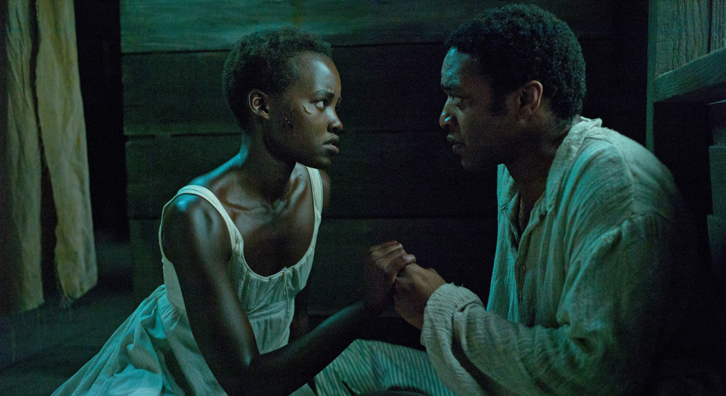
12 Years a Slave
Directed by: Steve McQueen
Written by: John Ridley (screenplay), Solomon Northup (memoir)
Starring: Chiwetel Ejiofer, Michael Fassbender, Lupita Nyong’o and Sarah Paulson

Connecting 12 Years a Slave immediately to its Oscar buzz because of when a studio chose to release it would be a disservice to it.  To put it simply, this is the most powerful film about American slavery that I’ve ever seen, and diminishing that accomplishment by asking if the white male establishment of the Academy can handle it enough to nominate it for anything is at the bottom of my list.

Steve McQueen’s previous two features, Hunger and Shame, were visually brilliant, but at times lacking a crucial human element.  This was especially true of Shame, whose miserabalism was supposed to be its own profound reward but ultimately registered as empty.  There is obviously a great deal of suffering in 12 Years a Slave, but also an intense humanity.

Continue reading

REVIEW: After Tiller

AfterTiller1

After Tiller  
Directed by: Martha Shane and Lana Wilson
Written by: Greg O’Toole, Martha Shane and Lana Wilson

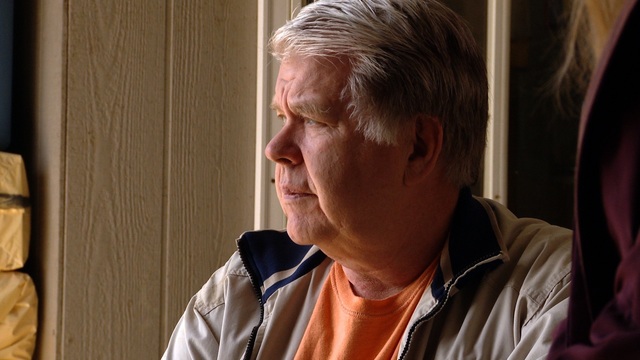
After Dr. George Tiller was assassinated in a Kansas church in 2009, only four doctors in America remained who would perform late-term abortions.  After Tiller is a somewhat illuminating profile of those people and the women who seek the controversial procedure.

Directed by Martha Shane and Lana Wilson, After Tiller is a compassionate, often clear-headed look at an issue that often prompts shouts of fire and brimstone.  Some of that fire and brimstone makes it into the finished product, as protesters stand outside the various clinics with signs and rosaries, urging the women not to go through with the procedure or damning the doctors who perform it.  For the most part, though, the documentary stays inside the clinics and homes where those doctors work and live.

Those clinics are fascinating places to be, even if many of the employees seemed to put on some sort of facade for the camera at times.  In fact, After Tiller was most effective when that facade clashed with the heart-wrenching testimony of a patient.  They are not only grappling with the unimaginable hardships of their everyday; they are trying to show the world what they do, and why.

In that sense, Shane and Wilson are clearly on their side.  However level-headed their documentary seems, simply looking at these doctors as people instead of lightning rods is taking a stand on this issue.  In an interview on Democracy Now! following the film’s premiere at Sundance, Shane calls the doctors “incredible individuals.”

In that same interview, Wilson talks about her frustration at the human element being left out of the discussion on local media following Dr. Tiller’s murder. She also said that she was motivated by why exactly women would need a third-trimester abortion, which was also my biggest question going in to see After Tiller.

Those abortions account for less than 1 percent of all procedures.  They involve euthanizing the fetus and allowing the woman to give birth, and they’re usually performed in instances where the child will have no quality of life or the mother will be killed in labor.  Dr. Shelley Sella, who works in Albuquerque, New Mexico, talks about the bleakness of this operation, and how it’s impossible not to see those fetuses as babies.

This is how she explains it:

“I think about what I do all the time, and I recognize what I do, and at times I struggle, and at times I don’t.  But I always come back to the woman, and what she’s going through; and, often, what life will this baby have?  What will it mean to be alive with horrific fetal abnormalities?  It’s not just about being alive, it’s about life and what does it mean?”

It’s an astonishing admission, followed by one of several heart-wrenching interviews with patients, their quivering, nervous hands substituting for their faces and protecting their identities.  It’s impossible for me to fathom their situation, and the undeniable weight it has on them and the doctors.

When Shane and Wilson steer away from scenes like that toward the protests, the biggest problems with After Tiller surface.  It’s not that the filmmakers express a distinct point of view in advocating for legal abortion.  As A.O. Scott noted in his review, “a documentary should be assessed as a representation of the world as it is, from a perspective that is itself part of that world.”
Dr_Carhart

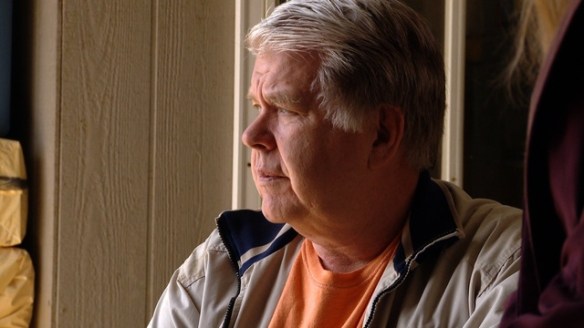
I completely agree with that sentiment, but at times it felt as if the issue was being presented with the exact absence of humanity that Wilson said she sought to restore. This is especially true of Dr. LeRoy Carhart, who moves from Nebraska to Maryland during the course of the documentary because late-term abortions are outlawed.  Shane and Wilson follow him as he scouts out various locations, one of them a standard-looking house in a suburban neighborhood.

There are a couple of eerily placed shots during this sequence, though.  One is of a playground from the other side of a fence.  The other is of a daycare sign, with Carhart and his wife waiting at a traffic light near it.  These shots immediately stuck out to meFor such a formally straightforward documentary, the inclusion of these shots at the moment when a late-term abortionist is looking for a building to rent seemed extremely wrong-headed.  They don’t highlight the moral toll the job has on Carhart as much as they add a queasy, and inappropriate, audacity.

After he finds a building and reopens in Maryland, anti-abortion protestors target his landlord by protesting outside his daughter’s middle school with photos of late-term aborted fetuses.  This entire segment with Carhart, from when he left Nebraska to when he resettled, weakened the movie’s effect on me.  I’ve seen this side of the abortion debate, with its seemingly endless protests and polarized narratives.

What I hadn’t seen before was Dr. Susan Robinson, who also works in Albuquerque, talk with heavy reluctance about how she decides when to perform the procedure. There was also the moment where Dr. Warren Hern, based in Colorado, tells a rape victim looking for guidance to seek out the police, and then hugs her.  Those are the scenes that make After Tiller a worthwhile and necessary contribution to this issue.  With their unprecedented access, Shane and Wilson capture enough of them to overshadow those other flaws.

Grade: B-
REVIEW: The Counselor

The-Counselor-Fassbender

The Counselor
Directed by: Ridley Scott
Written by: Cormac McCarthy
Starring: Michael Fassbender, Penélope Cruz, Cameron Diaz and Brad Pitt

Cormac McCarthy never ceases to come up with flinch-inducing ways to kill, or elegant ways to philosophize about it.  In No Country for Old Men, there was the cattle-gun-wielding assassin offset by the world-weary sheriff.  In Blood Meridian, massacre after massacre in a blood-soaked desert and a ranting, apocalyptic Judge.  Then there was the actual apocalypse in The Road, where a man and his son stumble upon a den of cannibals with half-eaten naked people locked in a cellar.  They talk about keeping a moral fire alive in a world made of ash.

The Counselor is McCarthy’s first outing as a screenwriter, but it is filled with the kind of boundless evil and morally compromised good of his novels.  The rich language in the movie may be off-putting to many viewers, just as it was in David Cronenberg’s adaptation of Cosmopolis.   Though these are commercial movies, they have very distinct and unsentimental voices behind them that illustrate a worldview beyond realism.

If McCarthy is a man obsessed with chronicling the poetry of violence, he is also equally obsessed with doing so on the U.S./Mexico border.  There are also stops in places like Boise and London here, but most of the plot is rooted along that tumultuous cultural and economical dividing line.

Continue reading

REVIEW: Captain Phillips

Captain Phillips

Captain Phillips
Directed by: Paul Greengrass
Written by: Billy Ray (screenplay), Richard Phillips (book)
Starring: Tom Hanks, Barkhad Abdi, Barkhad Abdirahman and Faysal Ahmed

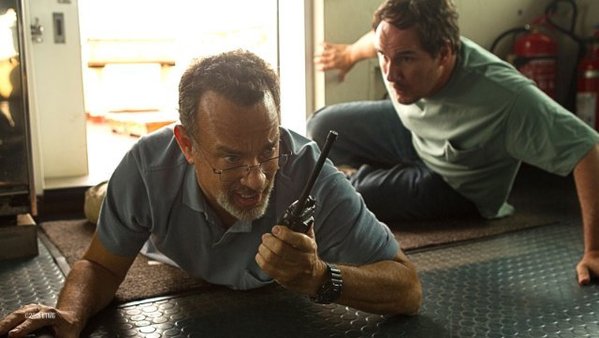
The final scenes in Captain Phillips are some of the most disturbing and haunting of the year.  They also somewhat erase the good guy/bad guy mentality and replace it with raw humanity. (Spoiler ahead) They involve Richard Phillips (Tom Hanks) screaming his head off while covered in the blood of recently-killed Somali pirates who were holding him hostage.  It is a raw portrayal of trauma, and it resonates more than anything else in this taut if mostly unsubstantial movie.

Like Gravity, Paul Greengrass’ latest film operates on the built-in history audiences have with its Hollywood star.  Hanks doesn’t disappear into the title character as much as he uses his image to enhance the terror of the situation.  It’s the actor we are meant to see struggle with a pirate raid on his cargo ship while traveling off the African coast.  Those last scenes in particular are crucial reminders of that.

That isn’t to say that Greengrass rests on his laurels because he has one of the most famous stars in the world in his movie.  He films Captain Phillips as if it were a documentary, as if the source material (written by the actual captain and adapted by Billy Ray) were an absolute truth.  It is an exhilarating, immersive approach to the material, but also flawed.  Richard Phillips obviously has a very biased account of these actions, and though the movie attempts to offer slight sympathy to the pirates, Phillips’ crew largely comes off as a mindless herd that would be nothing without their captain.

captainphillips1

Once Phillips is taken hostage in the claustrophobic confines of a lifeboat, this ceases to be an issue.  The captain of the Somali pirates, Muse (Barkhad Abdi), becomes less an antagonist than he does a man trapped by a life’s worth of bad options.  In a crucial scene, Phillips ask him why he has to steal and loot, that there must be some other choice in life.  “Maybe in America,” he replies.

The scenes inside that lifeboat are truly riveting.  If the movie had stayed pinned inside that action and not over-indulged the Navy officers attempting to rescue Phillips, it would have been much stronger.  Thankfully the tactical efficiency of the military is offset by moments of moral ambiguity, much like Zero Dark Thirty.

I wish the movie had spent more time with Muse at the end, because although it makes its point by showing officers coldly tell him “your friends are all dead,” it spends much more time with Phillips, who is so traumatized that he can’t even form a coherent sentence.  This is another example of the movie’s flawed, if riveting, subjectivity.  Greengrass and Ray attempt to rise above it in those final scenes, but they partially fall prey to star power, which will likely be the biggest audience (and Oscar) draw to their movie.

Grade: C+

REVIEW: Gravity

gravity movie

Gravity
Directed by: Alfonso Cuarón
Written by: Alfonso Cuarón & Jonás Cuarón
Starring: Sandra Bullock and George Clooney

Behold the technical majesty of Alfonso Cuarón’s Gravity.  Watch as debris from a Russian satellite smashes into a repair operation led by an American astronaut team, sending them whizzing, floating and spinning in the beautiful, terrifying abyss.  Watch it and take it in, because that’s what you’re supposed to do.

I thought I did everything I was supposed to do with Gravity.  I saw it in 3D, I saw it in Imax and I saw it with a virtually sold-out crowd.  Why then, was it underwhelming?  There is an answer to that question, and it may be hard to hear for the many who have lauded praise on the film since its triumphant festival circuit.

This is a movie that was made solely for its own tech savvy.  It exists because of its technical mastery, not for any tangible idea.  Cuarón uses every cinematic element at his disposal to sustain uninterrupted awe, and it is one of the few movie-going experiences in recent memory that is truly exhausting.   By the time Ryan Stone (Sandra Bullock) hops from space station to space station and then back to (spoiler) Earth, her weariness is not just her own, but the audience’s as well.

Gravity_SBullock

Bullock carries the movie quite well, and is aided in parts by the effortless charm of George Clooney’s on-screen persona.  For long stretches, though, it’s just her dealing with whatever zero gravity obstacle Cuarón can throw at her.  There is a hefty bit of 3D gimmickry, more than there should be in a prestigious project like this, but for the most part it is effective as a grand aesthetic spectacle.  More troubling than screws and tears floating toward the camera, though, are the number of unnecessary tracking shots of Sandra Bullock’s ass.  The movie even ends on a close up of her heaving, wet-t-shirt-covered breasts.

Why?  Because Gravity is Cuarón’s playground.  The director of such rigorous works as Y tu mamá también and Children of Men has aimed his sights solely on the machinations of pleasure and terror, not as it applies to the characters, but to the audience.  This is movie as roller coaster, and the spectacle is undeniable.  It’s hard to put into words the awe of seeing a space station crumble and explode as the camera stays pinned to a twirling, panicked astronaut.   She then drifts hopelessly into space, as alone as any human could ever be.

The close-up of Stone’s face that follows that sequence reflects Earth and space while her helmet fogs up.  Even here, the effects do not relent.  There are quiet moments in Gravity that are as visually stunning as the relentless action sequences, but even in those moments the movie felt defined by its technology rather than enhanced by it.

Many have and will likely continue to compare this to Kubrick’s 2001: A Space Odyssey, but that would be extremely misguided.  Gravity attempts to justify its technological means with a human element, and who better to do this than two of Hollywood’s most charming stars?  It is not a cold, calculated examination of a technological takeover, though.  It is a technological takeover, and a beautiful one at that.

Grade: C

REVIEW: Rush

430674-rush-movie-review

Rush
Directed by: Ron Howard
Written by: Peter Morgan
Starring: Chris Hemsworth, Daniel Brühl, Olivia Wilde and Alexandra Maria Lara

Ron Howard is not a director often associated with the word exhilarating.  His diverse directorial efforts are often quite safe and stale; safe enough for Academy voters (A Beautiful Mind, Apollo 13) or stale enough for box office draw (Da Vinci Code, How the Grinch Stole Christmas).  The two sides of Ron Howard, unlike, say, the two sides of Steven Soderbergh or Gus Van Sant, are not interesting enough to really write about.

That being said, Rush is probably the finest film he’s ever made, and by far the most interesting.  He showed an impressive knack for organic suspense and working with actors in 2008’s Frost/Nixon, so much so that Frank Langella’s turn as Richard Nixon is the only thing that people really remember about it.

Continue reading

REVIEW: Don Jon

Joseph-Gordon-Levitt-Is-Don-Jon-604-1

Don Jon
Directed by: Joseph Gordon-Levitt
Written by: Joseph Gordon-Levitt
Starring: Joseph Gordon-Levitt, Scarlett Johansson, Julianne Moore and Tony Danza

For the first half of Don Jon I was prepared to write it off as a gross, occasionally charming debut feature, but the destabilizing element introduced in the second half (Julianne Moore) throws the movie completely off the beaten path in the best possible way.  Before Moore’s character Esther enters the picture it came dangerously close to reveling in the kind of misogyny that it attempts to send up.

At first, there is just Jon (Joseph Gordon-Levitt) and, as he says, his body, his pad, his ride, his family, his church, his boys, his girls and his porn.  The flashy montages of gyrating asses and blowjob lips quickly show which of those takes precedence in his life.  And, like the main character of (500) Days of Summer’s misreading of The Graduate, he is woefully misguided about the reality of the situation (he thinks it’s real).

Continue reading

REVIEW: Stories We Tell

k-bigpic

Stories We Tell  
Directed by: Sarah Polley
Written by: Sarah Polley

Hopefully you go into Sarah Polley’s Stories We Tell knowing nothing about what happens. In the interest of preserving that for you, do not read past this sentence unless you’ve seen this beguiling meta-documentary.

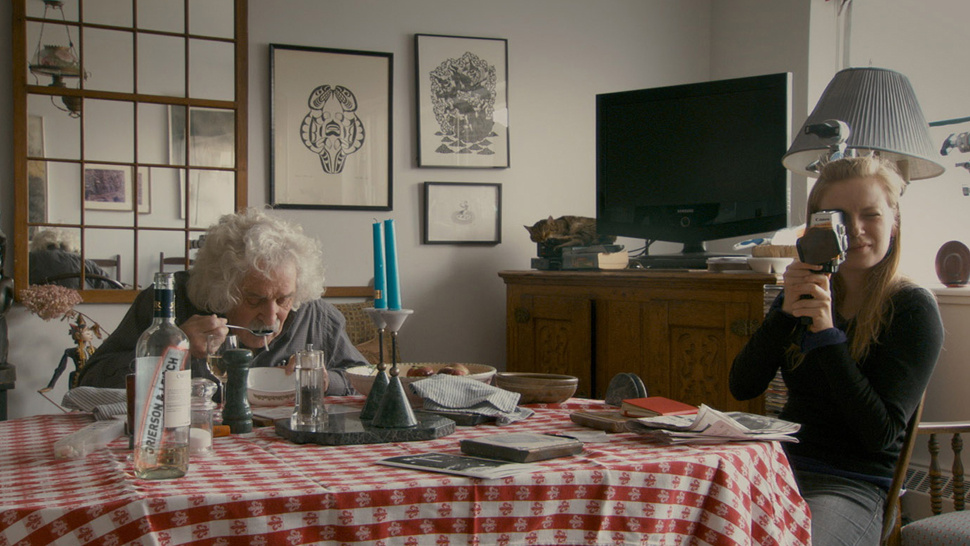
Stories We Tell is filmmaking of a very personal nature while also being a relentless interrogation of the documentary form.  Polley interviews her friends and family about her deceased mother, filming her process as part of the process.  Along the way she acknowledges the impossibility of objectivity while attempting to achieve it, and throws in some aesthetic twists too.

Continue reading