Summer Movie Awards 2011

The Most Ambitious: The Tree of Life The goal of Terrence Malick’s Tree of Life is no less than to funnel the creation of the universe through a child.  That that child and his family closely resembles the director’s own makes this his most personal film to date as well.  With some of the most stunning cinematography you’ll ever see in a movie, Malick captures something elemental in this movie.  You may not have liked it, but you’ll never forget it.

The Most Laughs: Bridesmaids With one of the best comedic ensembles in recent memory, writers Kristen Wiig and Annie Mumalo paired up with director Paul Feig and producer Judd Apatow to create this hilarious, raunchy comedy about the bond among women.  Bridesmaids proves that an ensemble of females can spit vomit and shit just as well as men, which is something Hollywood needed to be force-fed.

Continue reading

CLASSICS: American Beauty

American Beauty
Directed by: Sam Mendes
Written by: Alan Ball (screenplay)
Starring: Kevin Spacey, Annette Bening, Thora Birch, and Wes Bentley

American Beauty shouldn’t be the kind of movie Oscar loves.  It’s hard to watch a movie that begins with a man saying that masturbating in the shower will be the highlight of his day and pair it alongside other Best Picture winners like The King’s Speech or Shakespeare In Love.

That’s not even the biggest reason American Beauty defies the Academy, though.  At almost every chance the voting members get, they favor superficial uplift over true grit.  Yet when you look closer at this movie (as its tagline instructs you to do), you see that there is no happy ending, at least not in the traditional Best Picture sense.  Lester Burnham (Kevin Spacey) really does die like he says he’s going to in the beginning.

Movies that blatently tell you their outcome are usually more surprising than ones with a big reveal at the end.   Sometimes knowing the conclusion is more baffling than not.  How can a man who’s already dead die, and why will we care?

Continue reading

DEBATABLE: The New Medium

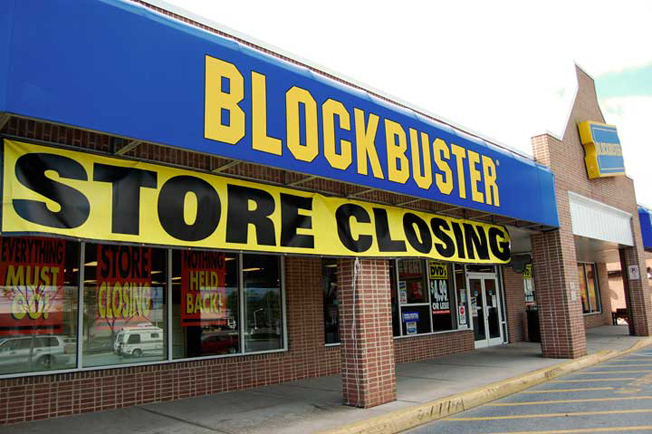
Luke: To have not noticed the changes in the movie industry lately, you’d have to be completely removed from the world. The largest rental chain, Blockbuster, has filed for bankruptcy and closed a significant portion of its stores. Regional chains have followed suit in the downsizing or closing, leaving local rental stores to either collapse completely or survive due to the lack of competition and reliance on the traditional markets that haven’t succumbed to Netflix or Redbox.

Both of these alternatives, in addition with digital downloads, pirating and other forms of new media sharing, certainly come with their issues of pricing, legality (how many computers can share a Netflix account) or lack of variation in distribution, but their benefits can’t go unnoticed.

Now more so than ever, movies are reaching further limits.  People can download, rent and take their movies to go on their computers or on their iPods and iPads. Using Internet markets like Amazon or iTunes, a trip to town is not needed. At any CVS or Wal-Mart, audiences have access to rent foreign films that couldn’t show at their local cinema. Easier access to harder to find films; however, seem to make way to more popular, in demand films like The Proposal and This Is It.

In a way the accessibility is a fascinating, new and exciting tool at hand. When abroad, Netflix wouldn’t allow me to download 300 after visiting Sparta — the service is not available yet in Greece — but iTunes allowed me to rent, download and sync the video to my iPod for watching on the go. Since, several films have accompanied my travels, making the ten minutes waiting in line at the train station here, forty minutes on a plane here go by much more enjoyably. Often my biggest complaint in life is not having enough time to watch all the films I desire.

Greater access has been glory. Netflix has spared me countless bus trips to the local video store just hoping they will have the movie I am looking for. Redbox has saved me dollar upon dollar for silly, fun films I watch with my family (or might not watch if we don’t get to it) but wouldn’t dare risk spending $5 on at Blockbuster.

The negatives are apparent, at least to those who see beyond the benefits to themselves. With the largest movie retailer in North America failing, and more following, it is impossible to track the full and part time jobs lost. Without a movie box description, video store trailers and ads, stumbling across a good foreign or indie movie usually takes back burner to the highlighted, big studio hits like Tron: Legacy.

The future only brings about more uncertainties to the once fairly stable industry — at least it has not suffered the wrath of the internet the way the music industry did, instead finding a way to coexist and profit — especially with Facebook’s Warner Bros. deal and Netflix’s price increase. Now that we can take movies anywhere, it will be interesting to see where we will take movies.

Matt: There’s no doubt that Netflix changed the movie rental business.  I would even go so far as to call them the Napster of the movie rental business.  Though their business models are vastly different (Netflix started out charging), the scope of the change they brought to this industry is astonishing.  Coupled with technology like 3G and the evolution of the smartphone, media consumers have developed a “watch it anywhere” mentality which has left companies like Blockbuster in the dust.

In my opinion, smartphones will always be better for the latest YouTube video than they will be for enjoying a film (David Lynch agrees).  I would never feel comfortable reviewing a movie I only watched on an iPod Touch precisely because I wouldn’t consider myself to have actually watched it.  Though the screens are becoming higher and higher resolution, the image and experience that we can have on a home theater system or, even better, the actual theater is unparalleled.

Presumably if you’re watching the movie on a portable device, you yourself are on the move.  Sure, 300 may be able to be digested like that, (especially if you’ve seen it before but that’s a horse of a different color) but watching a film like There Will Be Blood or 2001: A Space Odyssey on a portable device in 20 minute increments doesn’t really do justice to their complicated camera movements, gorgeous cinematography, or deliberate pacing. They were made to be seen in a single sitting.  To me, a smart phone is something you should watch internet videos on while you’re waiting in the theater for the real movie to start.
CLASSICS: Blow Out

Blow Out
Directed by: Brian De Palma
Written by: Brian De Palma (screenplay)
Starring: John Travolta, Nancy Allen, John Lithgow, and Dennis Franz

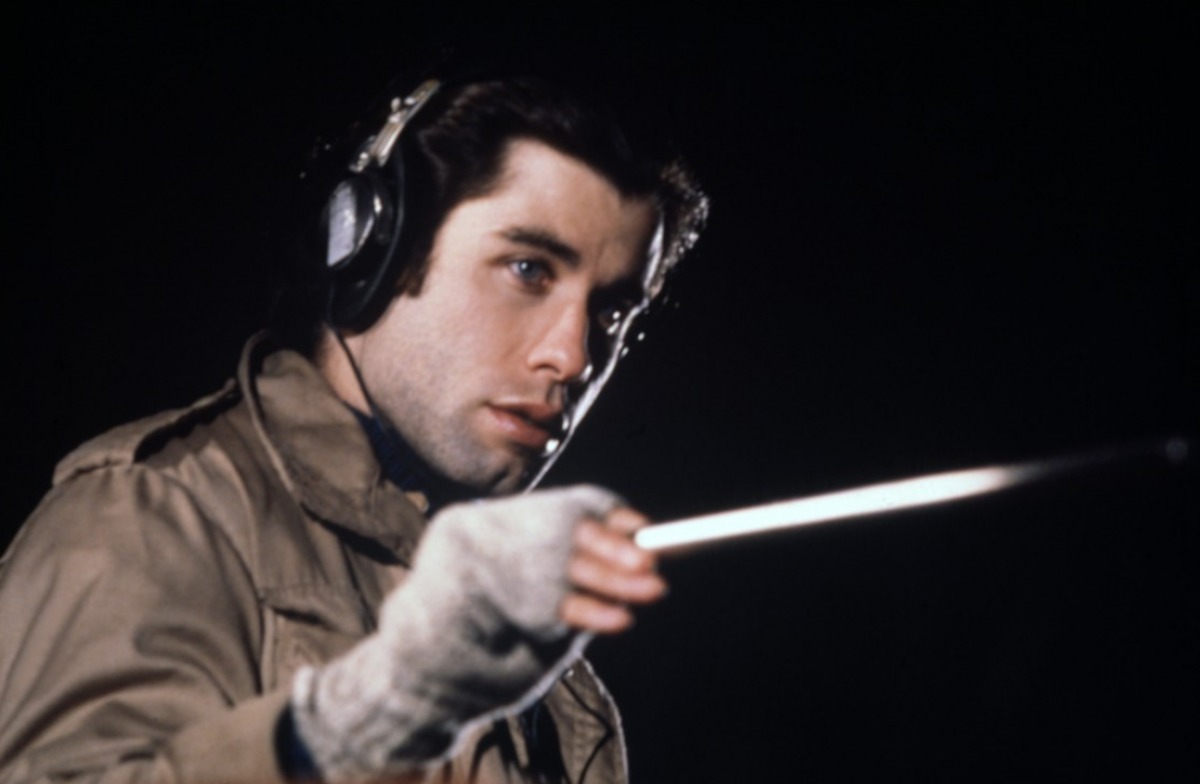
It’s sad that Blow Out, perhaps the finest film I’ve seen from the 1980s if not certainly one of the top five, is a forgotten relic of that decade.  Director Brian De Palma is known more for 1983’s Scarface, which looks like child’s play compared to this masterpiece.  John Travolta is known for fading into obscurity until Pulp Fiction, yet in this film he gives his greatest performance.

In a decade where the political propaganda of Top Gun and the teen angst of John Hughes’ films are the lasting impressions of American cinema, it’s easy to see how a film like Blow Out that uses a dominant color palette of red, white and blue in a story of political corruption and murder, would fade away.  Thanks to those people at The Criterion Collection, it has resurfaced and been redistributed for the generation that missed it so they can get swept up in its mastery.

Continue reading

CLASSICS: Dr. Strangelove

Dr. Strangelove or: How I Learned to Stop Worrying and Love the Bomb
Directed by: Stanley Kubrick
Written by: Stanley Kubrick, Terry Southern, & Peter George (screenplay), Peter George (novel)
Starring: Peter Sellers, George C. Scott, Sterling Hayden, and Slim Pickens

Stanley Kubrick never made an original movie.  What he did was take works of literary fiction and make them his own, whether it was altering the plot altogether (most prominently in The Shining) or simply telling a story visually.

In the case of the latter, he was one of the most gifted American directors the world has ever known.  Dr. Strangelove may be his greatest film, although Kubrick devotees each have their personal favorite.  However, I’ll ask you to consider what he did with this movie.  He made a comedy, a genre that today seems stuck in visual purgatory, that is just as much a feast for the eyes as it is for the ears.  Considering Dr. Strangelove has one of the funniest screenplays every written, that is quite an achievement.

Continue reading

CLASSICS: The Godfather

When we first started this site, Luke and I decided to only review movies that were newer and try to stick with the 21st century without  going further back than 1999.  Of course we watch dozens of movies each year that go as far back as the Silent Era, so we decided to create a segment of CyniCritics where we don’t necessarily review “older” movies, but instead pick out the best ones and then talk about them from a modern standpoint.  Think of it as Roger Ebert’s “Great Movies” series written by college students.  We’re starting with The Godfather, which is probably the best place to start next to Citizen Kane.  As always, we appreciate you taking the time to read our work and we like reading yours, so comment with feedback!

The Godfather
Directed by: Francis Ford Coppola
Written by: Francis Ford Coppola & Mario Puzo (screenplay), Mario Puzo (novel)
Starring: Marlon Brando, Al Pacino, James Caan, and Robert Duvall

On the surface, The Godfather will always be about America by way of the Italian Mafia.  The organization is structured less like the American government and more like a corporation; a captain of industry on top and the chain of command that goes all the way down to soldiers, drivers, and errand boys.

Digging deeper, though, Francis Ford Coppola’s epic should be examined from a more basic, primal standpoint.  Because yes, Don Vito Corleone (Marlon Brando), his three sons (Al Pacino, James Caan, and John Cazale) are part of a massive criminal empire, but this story is told on a very personal level.  There’s a reason why we’re allowed to see the inner workings of all the characters.  Their traits, most specifically how they react to violence and being wronged, are what bring to light what I think is this movie’s real purpose: to show the fight between human nature and experience and animalistic instinct.

Continue reading

If they were in television… Michael Bay

Notable Films: The Rock, The Island, Armageddon, Pearl Harbor, Transformers series. 

Famous for: Explosions, great action sequences, narrative incoherence, military propaganda, the decline of mainstream American cinema, shooting women like he is filming porn.

Hypothetical title: The Colony

Hypothetical premise: Focuses on the first station in space to host private citizens from Earth.  It starts off peacefully enough, but soon enough the mixed cultures start feuding, and in order to keep order, the station’s AI turns on them and begins killing anyone who starts a fight.  This doesn’t sit well with the nearby military installation, who begin planning to rescue everyone with the latest military technology.  The series rotates between a couple brave American soldiers and a witless but charming protagonist on the colony, his shallow love interest, and over-bearing but comical parents.

Cross between: The Island, The Rock, 2001: A Space Odyssey, Wall-E, and Transformers.

Likely to bring: Some Bay regulars are Ben Affleck and Shia LaBeouf, so why not cast them in the two lead roles?  You can place pretty much any attractive super model in the love interest role, but why not take an exceptional actress like Scarlett Johansson and drain her of life?  For the parents, why not add in Patricia Clarkson (she’s a mom in everything now) and John Turturro. 

Likeliness of this happening: 4/10.  Bay couldn’t make enough money in television and explosions don’t look nearly as good on a small screen.

Five Awesome Movie Dads

As a mandatory companion piece to our “Five Awesome Movie Moms” from Mother’s Day, here we’re weighing in on the movie dads that are either all the way great, or show moments of greatness that redeems their other faults.

Atticus Finch- A single father and a brilliant lawyer, Atticus has time not only to teach his daughter Scout to stick to her moral guns in a time of deep-rooted racism, but he also practices what he preaches.  Gregory Peck delivers a series of brilliantly written monologues both in and out of the courtroom, which won him an Oscar as well as an endearing place in movie history.

Continue reading

SPOTLIGHT: Marion Cotillard

Marion Cotillard wasn’t very famous when she won the Best Actress Oscar in 2008 for her performance in La Vie en Rose, but after starring opposite Johnny Depp and appearing as a crucial character in a Christopher Nolan film, she began to be a recognizable face among the summer movie crowd even if they still couldn’t quite place her.  Cotillard is one of the most technically proficient actresses working today, using her eyes to level the audience and bring them into the rapture of the fiction that she inhabits.  Not since Catherine Deneuve has a French actress been accessible to American audiences at this level.  Set to appear in a new thriller from Steven Soderbergh later this year as well as next year’s inevitably successful new Nolan Batman film, she most recently captured hearts and minds in Woody Allen’s excellent French-set comedy Midnight in Paris.

Continue reading

If they were in television… JJ Abrams

Notable films: Mission Impossible III and Star Trek.

Famous for: Breathing new life in old franchises, science fiction, character focused drama in big-budget actions, well-orchestrated visuals, brightly-lit sets even for dark materials, the hit TV show Lost and other serialized television work.

Hypothetical title: Aftermath Continue reading