BEST PICTURE NOMINEE: War Horse

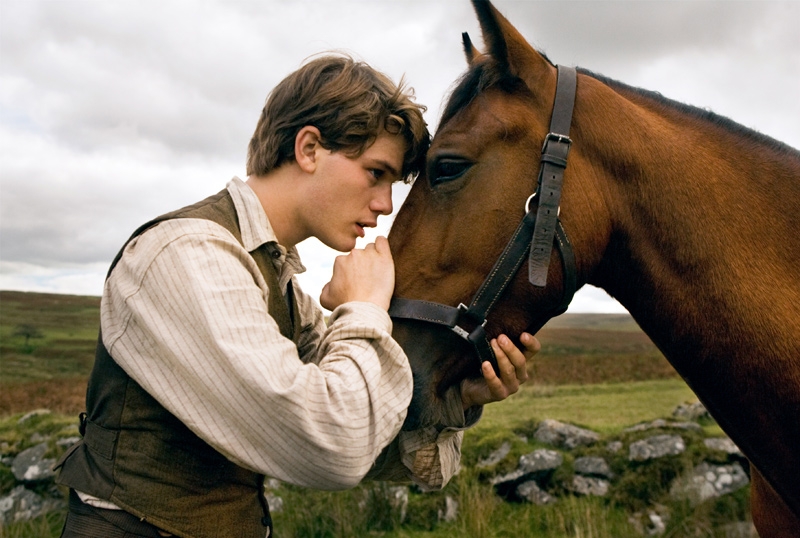
War Horse
Directed by: Steven Spielberg
Written by: Lee Hall and Richard Curtis (screenplay), Michael Morpurgo (novel)
Starring: Jeremy Irvine, Peter Mullan, Emily Watson and Niels Arestrup

In his second movie of 2011 (released only a few days after The Adventures of Tintin), Steven Spielberg has made one of the most quietly beautiful films of the year and his career.  War Horse may lack the grand narrative spectacle that follows much of his other work, Tintin included, but its imagery is truly captivating.

Continue reading

BEST PICTURE NOMINEE: Midnight in Paris

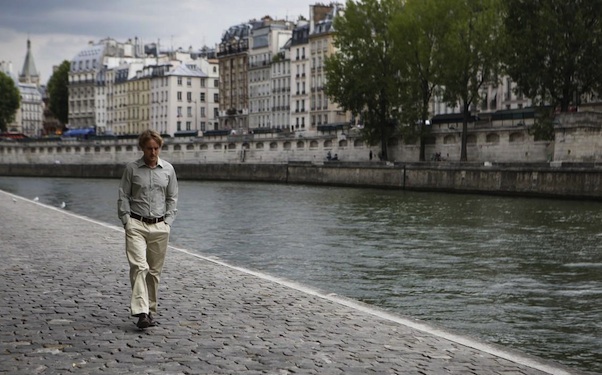
Midnight in Paris
Directed by: Woody Allen
Written by: Woody Allen
Starring: Owen Wilson, Rachel McAdams, Marion Cotillard, and Corey Stoll

Finally, the first movie of the summer that deserves the label “art.”  Woody Allen continues his stroll through Europe with this weird, touching, and hilarious trip through the streets of Paris.  Midnight in Paris was the opener of this year’s Cannes Film Festival, mostly because it’s everything the French love: funny, beautiful, and set in France.

Allen’s career has been an almost definitive representation of the “on-again, off-again” method of filmmaking.  He cranks out movies like nobody’s business, and many of them are masterpieces.  Some of them, especially recently, have been almost universal flops.  He is at his best when he takes the usual characters- neurotic artist, muse, pretentious academic- and puts them in something that isn’t about them.

Continue reading

BEST PICTURE NOMINEE: Hugo

Hugo
Directed by: Martin Scorsese
Written by: John Logan (screenplay), Brian Selznick (book)
Starring: Asa Butterfield, Chloë Grace Moretz, Ben Kingsley and Sacha Baron Cohen

Hugo would be a good place to start in a film history class.  Not only does it glide through the early history of silent movies, but it also utilizes the latest digital filmmaking technology in doing so.  Martin Scorsese has created a film worthy of the 3D technology that is infecting every big Hollywood blockbuster, and he has done it by using it not as a showy gimmick, but as a storytelling tool.

Here, that third dimension immerses us in the movie’s world, drawing us into an opening sequence that transforms from turning clock gears to an overview of Paris, into a train station and finally back into the walls full of clock gears as the young boy Hugo (Asa Butterfield) zooms through these tunnels with make-shift abandon.  In one of the most finely filmed sequences of the year, Scorsese keeps track of him with a clever tracking shot that simply pans as he turns corners.  If this had been converted to 3D instead of filmed that way, you’d already have whiplash.

Continue reading

BEST PICTURE NOMINEE: Extremely Loud and Incredibly Close

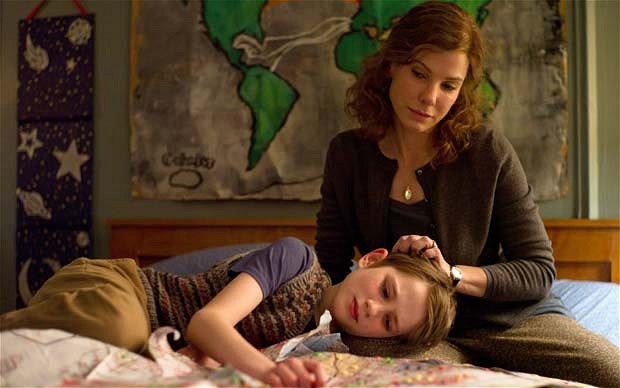
Extremely Loud and Incredibly Close
Directed by: Stephen Daldry
Written by: Eric Roth (screenplay), Jonathan Safran Foer (book)
Starring: Thomas Horn, Tom Hanks, Sandra Bullock and Max von Sydow

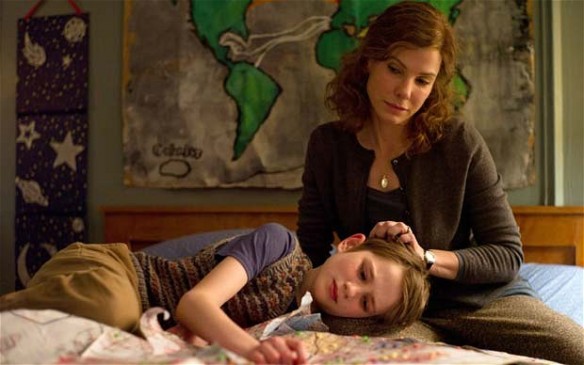
The opening image of Extremely Loud and Incredibly Close is of a man falling to his death, with papers behind him that fade into the title; its closing image is of a boy swinging upward on a swing, triumphant.  It freezes on this image, asking the audience to pause and share in that triumph.  This is hard to do for many reasons, but mostly because that man who was falling to his death wasn’t doing so because he wanted to.  He is falling from the Twin Towers, and it is Septermber 11th, as the movie and its director, Stephen Daldry, will remind you of several times.

Oskar (Thomas Horn), the troubled boy at the film’s center, torments himself endlessly with the messages his father (Tom Hanks) left on their answering machine while he was trapped in the World Trade Center on what Oskar calls “The Worst Day.”  After finally working up the courage to enter his father’s room, he searches the top shelf, knocking over a blue vase in the process.  Inside that vase is a key whose mysteries occupy the remainder of the narrative.

Continue reading

REVIEW: Albert Nobbs

Albert Nobbs
Directed by: Rodrigo García
Written by: Glenn Close, Jon Banville and Gabriella Prekop (screenplay), George Moore (short story)                                                                                                                Starring: Glenn Close, Janet McTeer, Mia Wasikowska and Aaron Johnson


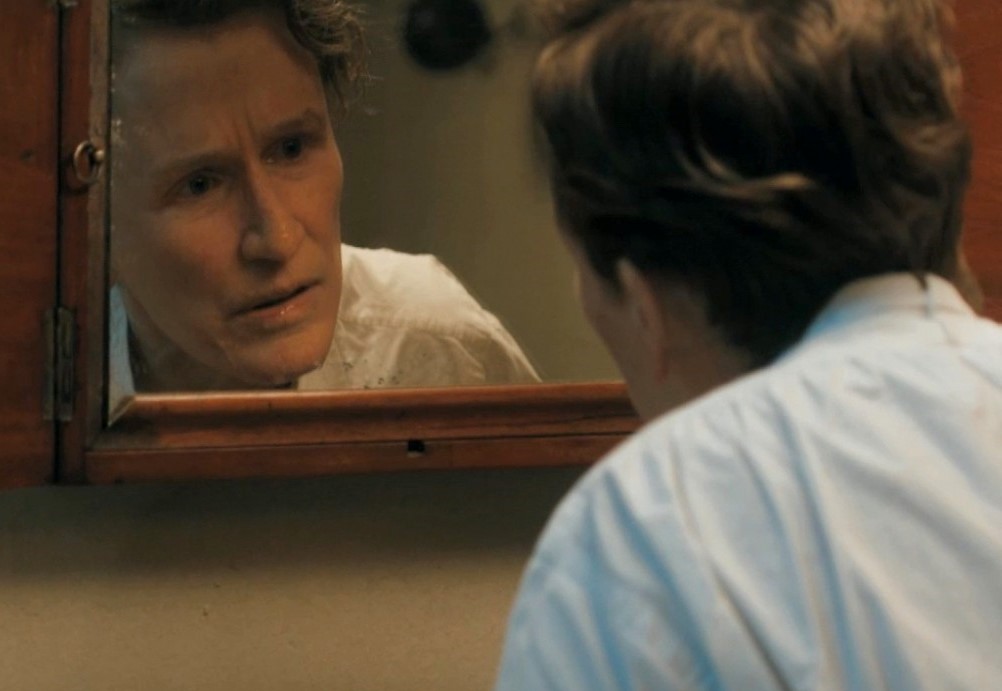
Albert Nobbs is a 10-year passion project for Glenn Close.  Not only does she star in the title role, but she co-wrote the screenplay and penned the lyrics for the end credits song “Lay Your Head Down.”  It is the story of a woman in Ireland who disguises herself as a man to work as a butler in a swank hotel for the upper class.  At least that is the story on the surface of it all.

The movie progresses Albert’s character in surprising ways, but in the end it simply comes to the conclusion that the answer is ultimately out of reach.  Close plays Albert with a deepened voice that shields a vulnerable core.  When her true identity is discovered by the hotel’s hired painter Hubert (Janet McTeer) when they bunk together, Albert nearly unravels.  All the careful planning- the money saved beneath floorboards, the meticulously designed appearance, the perfect job performance- seems like it will collapse in the melodramatic fashion that is typical of Oscar-nominated performances.

Continue reading

REVIEW: Shame

Shame
Directed by: Steve McQueen
Written by: Steven McQueen and Abi Morgan
Starring: Michael Fassbender, Carey Mulligan

After their much-revered 2008 film Hunger, artist-turned-filmmaker Steve McQueen teams up again with rising star Michael Fassbender for an even more daring film. Their latest, Shame, exposes a damaged sibling relationship — plagued by addiction and humiliation — in a revealing, sexually graphic yet restrained fashion that leaves their characters and audience stripped with nowhere to hide.

Shame focuses mostly on Brandon, a seemingly successful but empty man whose addiction to porn, masturbation, one-night stands, escorts and voyeurism leaves him lifeless and unsatisfied. Living alone in his sterile Manhattan flat, Brandon lives a claustrophobic routine. He wakes up exhausted and naked in a rumpled bed, staring off as if he weren’t alive and remains terse and to himself throughout the day. He has a good job doing something we never quite figure out and has very little to say to anyone. It doesn’t take long for us to figure out why. Continue reading

REVIEW: Haywire

Haywire
Directed by: Steven Soderbergh
Written by: Lem Dobbs (screenplay)
Starring: Gina Carano, Ewan McGregor, Michael Fassbender and Michael Douglas

Like a virus that won’t go away, Mallory (Gina Carano) jumps around the globe, slowing down or killing anything that gets in her path.  That is largely where the narrative similarities between her story and the one from director Steven Soderbergh’s last film, Contagion, end though.

Haywire is curious when placed with the rest of his catalog in that it focuses on a single individual but also contains a large ensemble cast.  Usually his films are one (Erin Brockovich) or the other (Traffic).  At the center of this semi-departure is MMA fighter Gina Carano, who Soderbergh saw fighting on TV and decided to build a movie around.  Carano’s ferociously physical performance as Mallory is by far the movie’s greatest asset.  Soderbergh films most of the action sequences in confined areas, letting her utilize the environment in astonishing and brutal ways.

Continue reading

REVIEW: The Artist

The Artist
Directed by: Michel Hazanavicius
Written by: Michel Hazanavicius
Starring: Jean Dujardin, Berenice Bejo, Uggie and John Goodman

In an era of cinema where films like Avatar and Mission Impossible: Ghost Protocol are breaking sensory limitations, The Artist provides audiences a different set of sensory challenges, in particularly, the absence or minimization of them.

For those who are unfamiliar with the title that is sweeping award’s season off its feet — it won Best Musical or Comedy at the Golden Globes earlier this week and is a Best Picture frontrunner with countless BAFTA and other guild nominations — The Artist is a nostalgic, black-and-white Hollywood throwback to the likes of Singing in the Rain, A Star is Born, Sunset Boulevard and other classic Hollywood bourgeoisie films. Oh, and if you haven’t heard, it’s a silent film.

Continue reading

REVIEW: The Iron Lady

The Iron Lady
Directed by: Phyllida Lloyd
Written by: Abi Morgan (screenplay)
Starring: Meryl Streep, Jim Broadbent, Alexandra Roach and Iain Glen

It’s no surprise at all that Meryl Streep’s portrayal of Margaret Thatcher is amazingly conceived and executed, worthy of any acting trophy that exists.  Everything from the posture to the voice and especially those trademark darting eyes are in full force in a movie that unfortunately fails to capture the true gravity of its subject.

Phyllida Lloyd, whose credentials include the much-maligned screen adaptation of Mamma Mia!, brings a typical biopic aesthetic to The Iron Lady.  Every character fits in its appropriate place and blends in with the environment unless they aren’t supposed to.  Abi Morgan’s screenplay, the biggest thing to blame for this film’s mediocrity, often extenuates Thatcher’s struggle to be taken seriously as a female politician.  Everything else is glossed over.

Continue reading

REVIEW: Weekend

Weekend
Directed by: Andrew Haigh
Written by: Andrew Haigh (screenplay)
Starring: Tom Cullen and Chris New

Weekend is a film that many have used to herald the honesty of independent cinema; a film tackling the subject of homosexuality where the characters are no longer grappling with that identity, but arguing about it.  Andrew Haigh’s debut feature is an incessantly political work about being gay in contemporary England whose dueling moralities surface through Russell (Tom Cullen) and Glen (Guy New).

Haigh begins and ends his feature with Russell, who is seen going over to hang out with his friends at a dinner party before going to a gay club.  That dinner scene is important in that it reveals absolutely nothing about Russell’s sexuality.  The camerawork is deliberately grungy, evoking a sense of documentary-like realism in that dinner scene and many of the ones that follow.  On a subway ride, Russell and Glen are filmed conversing as passengers bob and weave in front of the frame while the train hurtles down the tracks.

Continue reading