
Our (Belated) Best Female Performances of the Decade

1. Bjork- Dancer in the Dark It was already a complicated role to step into; a lower class immigrant who must work in a factory to support her son and save up for his surgery to save him from the same blindness that was dooming her.  She then runs into serious threats when capitalist America comes into the picture. Add in musical fantasies, tension from the sadist Lars Von Trier and impossible songs written by Bjork herself, and the role of Selma is just as doomed as the character.  But Bjork takes this tragic story, gives it the proper life, glimmer for hope and our sympathy to prolong the inevitable as long as possible, making it even that much more difficult to take. It’s a pure work of devastation to watch Bjork melt right down into the role, with her far-off eyes, that reckoning, hopeless smile and perfectly broken down English that match every last theme in the movie. Key Scene- Selma is in a jail cell broken down and alone and once again turns to music to take her away. Moving to the ventilator, she begins singing Julie Andrews’ “Favorite Things” to calm herself from one of the lowest points in her life. It’s a sad setting but a bright song, and then it gets even more disturbing when Bjork throws in the deep lumps in the back of her throat and tears matched with her revealing smile and dancing around. It’s heartbreaking to watch.

2. Ellen Burstyn- Requiem for a Dream- Her role as an aging widow hooked on caffeine pills in an attempt to get on her favorite television show is also one of the most heart-wrenching performances you’re ever likely to see.  Burstyn may have lost the Oscar, but her performance will live on longer than any of the nominees from that year.  Key Scene Her monologue to her son Harry.  It’s here that her character’s drug use is humanized, tragically.  Burstyn doesn’t go full-on with her grief, she restrains herself to devastating effect.  The close-up shot catches every nuance of a performance with many dazzling ones.

3. Naomi Watts- Mulholland Drive– Watts’ performance(s) in David Lynch’s mind-boggling neo-noir catapulted her to the ranks of Hollywood’s finest young actresses.  Without her perky smile and willingness to bear her body and soul, Lynch’s vision would’ve been less convincing.  Key Scene– As Betty auditions for a part in a movie, Watts makes the audition seem like reality thanks to a close-up of the two actors and her smoldering intensity and eroticism.  It’s unlike anything you’ll see in any other movie. Continue reading

ARCHIVE REVIEW: Fantastic Mr. Fox

Fantastic Mr. Fox
Directed by: Wes Anderson
Written by: Wes Anderson (screenplay), Roald Dahl (book)
Starring: George Clooney, Meryl Streep, Jason Schwartzman, and Bill Murray

The world of awkward young males and disapproving father figures often associated with the world of Wes Anderson is polarizing.  You have those who absolutely despise his style and those who absolutely love it.  Typically I fall into the former.  For all his faults, though, he does have a style.  Had I seen Fantastic Mr. Fox before Mr. Anderson’s other features, I’d have wondered what he was getting at with all of the others.  This is his best, most assured, most mature work , and it’s a stop-motion animation adaptation of a children’s novel.

It becomes perfectly clear in this film that all of the characters in Anderson’s other movies really were just cartoon characters.  Now that they are in the literal sense, their absurdest actions look and feel right.  The stop-motion techniques of the animation greatly help flesh out the emotion and style.  The camera work is amateur in the best sense of the word, making this feel like chaos that came together at the last minute.

Continue reading

ARCHIVE REVIEW: Dancer in the Dark

Dancer in the Dark
Directed by: Lars von Trier
Written by: Lars von Trier
Starring: Björk, Catherine Deneuve, David Morse, Peter Stormare

Brilliant auteur and unapologetic cinematic sadist Lars von Trier is one of the movies’ most polarizing figures among critics.  He has a cult following of fans, some of which are the most respected film scholars working today.  Almost all of his movies follow an artistic pattern of well thought out shots that often contain disturbing images.  This is where Dancer in the Dark is unique.

Von Trier’s emotionally wrenching film has a visual style that many will recognize from Cloverfield or NBC’s The Office.  It may throw fans off, and that’s probably his intention.  As a member of the Dogma style of film making, it is this director’s goal to throw you for a loop by defying everything held sacred in the movies.  He deconstructs typical methods and injects heavy amounts of emotion and tragedy in order to confound the viewer and leave them uncertain about what they’ve witnessed.  Dancer is no different in this regard.

Continue reading

Our (Belated) Best Movies of the 2000s

1. There Will Be Blood– Paul Thomas Andersen’s take on a corrupt, independent oil prospector at the turn of the century who just conned a family out of their oil-wealthy land is an epic exploration of two souls squaring off in a new world torn between spiritual and capitalistic ideals. The performance of Daniel Day Lewis gives Daniel Plainview flesh and blood thicker and blacker than the oil he devotes himself to drilling, carrying the film for nearly three hours and never skipping a scene that won’t enthrall. Those who can’t appreciate experimental filmmaking or principals of classic cinema like Citizen Kane will think this movie bores more than it bleeds. Though it’s a tragic tale, telling the American nightmare oppose to the America dream, it’s technically beautiful, if not perfect. The unconventional and strange cinematography and score are just a few of the elements that set Andersen up as rebellious poet, taking a stand against everything the digital film age embodies, and in doing so he creates something just as classic, magnificent and important as Citizen Kane, but clumping them together is injustice. There Will Be Blood mines deep into new territories and in the process, becomes a masterpiece.


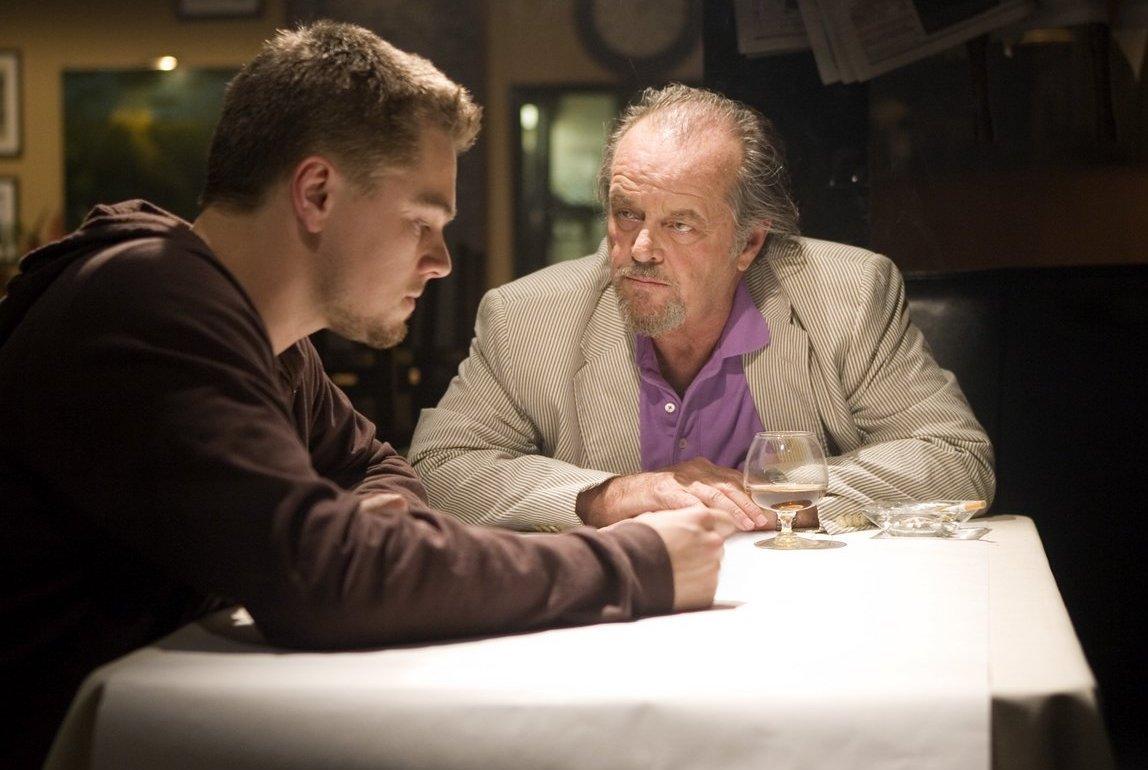
2. The Departed– Martin Scorsese’s visceral return to the crime drama yielded extraordinary results.  Packing an unbeatable cast into a winning script by William Monahan, Scorsese creates a world where corruption starts young and gets more powerful with age.  Leonardo DiCaprio, Matt Damon, Jack Nicholson, Vera Farmiga, and Mark Wahlberg are all excellent, but as with most of his films, Scorsese is the star of the show. He laces this tale of Shakespearean magnitude with perfect music and pacing.  Two and a half hours rarely go by so fast.  You’ll have whiplash by the time the film reaches its bloody climax, and love every second of it.  With The Departed, Scorsese’s created a classic that stands with his best work. Continue reading

ARCHIVE REVIEW: Milk

Milk
Directed by: Gus van Sant
Written by: Dustin Lance Black
Starring: Sean Penn, Josh Brolin, James Franco, and Emile Hirsch

Biopics may be one of the trickiest genres to pull off successfully.  This is because they are probably some of the most over made, over praised films made today.  It’s also because you need to tell an honest story that shows your subject’s dark side, but you also need to have some deep connection with them as well.  Gus van Sant’s Milk is so refreshing not because it redefines the biopic, but because it raises the bar impeccably, almost impossibly, high.

Thanks to a terrific cast led by Sean Penn’s bone-deep performance, a deservedly Oscar-winning screenplay from Dustin Lance Black, and van Sant’s film making moxy and deep connection to the material, Milk flies on the wings of creative passion.

This being said, it is not a perfect film.  If not for Penn’s incredible acting, Harvey Milk would almost be a two dimensional character.  It’s dangerous to have such a kind human being be the subject of a biopic.  Nothing against the kind, but they can be boring.  Luckily, Penn is a live wire, and lets us see the mischievous politician behind Milk’s crowd-pleasing rebellion.  His total immersion in the role earned him his second Best Actor Oscar of the decade, and he totally deserved it.

Continue reading

REVIEW: Get Him to the Greek

Get Him to the Greek
Directed by: Nicholas Stoller
Written by: Nicholas Stoller & Jason Segel (screenplay)
Starring: Russell Brand, Jonah Hill, Elisabeth Moss, and Sean ‘P. Diddy’ Combs

A spin-off is a notoriously bad idea when you’re looking for quality.  You get fast cash opening weekend, and then you sink like the Titanic when people realize what you’re selling is crap.  Thankfully, this is not the case with Get Him to the Greek.

What’s great about this movie is not just its perfectly paired comic dream duo (Russell Brand and Jonah Hill), but that it only references Forgetting Sarah Marshall, the “original,” in one obligatory millisecond.  Other than that, it’s allowed to stand on its own comic footing with the funniest character from Sarah Marshall, cocky coke addict Aldous Snow.

Brand became a star partially because of this then-supporting role.  He combined his expert comedic delivery with great material very, very well.  Here he gets to shine even brighter, pulling out all the stops and even finding a soul in a modern comedy character.  I wouldn’t go so far as to say brilliant, but it’s a nice surprise.

Continue reading

REVIEW: Prince of Persia: The Sands of Time

Prince of Persia: The Sands of Time
Directed by: Mike Newell
Written by: Boaz Yakin & Doug Miro (screenplay)
Starring: Jake Gyllenhaal, Ben Kingsley, Gemma Arterton, and Alfred Molina

I must say, after seeing the abysmal trailer for this film, I’m somewhat pleasantly surprised with the end result.  What initially looked like another bad video game adaptation with worse graphics than the actual game, Jerry Bruckheimer has done the unthinkable: taken the (resident) evil act of adapting a movie to screen and having it actually be entertaining.  Alas, no Jack Sparrow to make this tale interesting or worth embarking on.

Bruckheimer makes a living off of these ridiculous ideas.  He grossed more than a billion dollars off of a trilogy based on a Disney ride.Though he has production credits only, you can see his swash-buckling touch all over this desert tale.  The Sex and the City girls decorate their Middle Eastern adventure with desperation mixed with luxury and a hint of American arrogance.  You’ll find no such things metastasize on the surface of this film, though they are all there behind the scenes; a dwindling economy prevails but Bruckheimer still finds $200 million for his vision.  It’s not so much arrogance as studio caution that a white male has been cast in the lead role as the Prince of Persia.

Continue reading

ARCHIVE REVIEW: Crazy Heart

Crazy Heart
Directed by: Scott Cooper
Written by: Scott Cooper (screenplay), Thomas Cobb (novel)
Starring: Jeff Bridges, Maggie Gyllenhaal, Colin Farrell, and Paul Herman

It’s not uncommon that a performance is the sole interest in a film.  Sometimes an actor or actress digs so deeply into a role that they seem born to play that it overshadows all else in the film.  This, as you can probably tell, is the case with Crazy Heart.

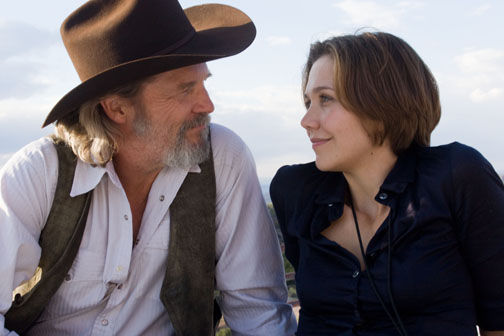
Jeff Bridges’ status as an underdog in Hollywood ended this year when he was awarded the Best Actor Oscar at the Academy Awards.  While the ceremony does often offer up the trophies as a career summation, sometimes the actual performance deserves it as well.  This is also the case with Bridges.  He brings to life washed-up country singer Bad Black so well that his portrayal gives this movie its depth and purpose.

First time director Scott Cooper was wise in letting his actors take a hold of his script, however lousy and mundane it may be.  For all its well intentions, the movie is boring.  By the commercial it looked like a country rehashing of The Wrestler, but Mr. Cooper is no Aronofsky.  As far as debuts go, this is underwhelming.

Continue reading

REVIEW: Shrek Forever After

Shrek Forever After
Directed by: Mike Mitchell
Written by: Josh Klausner and Darren Lemke (screenplay)
Starring: Mike Myers, Cameron Diaz, Eddie Murphy, and Antonio Banderas

Outside of Pixar, the Shrek franchise is probably the most famous digital animation escapade.  The first Shrek is widely considered a classic, an uproarious send-up of the Disney fairy tale.  The subsequent entries have all had their share of laughs, but none have matched the first one for blending heart-warming story with beautifully done satire.

The same is true with Shrek Forever After, the fourth and (they say) final installment in the series.  This one finds Shrek (Mike Myers) discontent and emasculated as the head of his new ogre family.  His first part in the movie begins with an intentionally redundant montage sequence showing the repetitiveness of his every day life with his three kids and his wife Fiona (Cameron Diaz.)

The rest of the movie follows Shrek as he pays for his discontent by making a fool’s bargain with Rumpelstiltskin (Walt Dohrn) and trades one day in his life for one day as an unhinged ogre.  The impish Stiltskin tricks him, taking back the day he was born and sending him to a world where he never existed.  From here on out, it’s a not so wonderful life.

Continue reading

ARCHIVE REVIEW: Revolutionary Road

Revolutionary Road
Directed by: Sam Mendes
Written by: Justin Haythe (screenplay), Richard Yates (novel)
Starring: Leonardo DiCaprio, Kate Winslet, Michael Shannon, and Kathy Bates

The way cinema portrays it, I’m led to believe absolutely no marriages of the 1950’s ended well.  With all of these shattered dreams and repressed rage foaming to the surface, it’s difficult to see how these people have time for mowing the lawn or raising the kids.

In fact, the children hardly make an appearance in Sam Mendes’ adaptation of Revolutionary Road, originally a cult novel written by Richard Yates.  They are alluded to, yes, but their most prominent function is to make Leonardo DiCaprio’s Frank Wheeler feel guilty about cheating on his wife April (Kate Winslet) on his birthday.  There he is walking into his own house, and here comes a birthday cake, a happy wife, and two smiling kids right after he got done staring ominously at the steering wheel of his car and feeling dreadful.

It’s this dreary mood of hidden secrets and suburban angst that drives much of Revolutionary Road. And though the children rarely appear, the adults do enough childish dreaming of their own.  April and Frank decide to move to Paris, an aspiration they remembered and want to achieve.

Continue reading