REVIEW: Beginners

Beginners
Directed by: Mike Mills
Written by: Mike Mills
Starring: Ewan McGregor, Christopher Plummer, Melanie Laurent

It isn’t surprising that you probably haven’t seen or even heard of Beginners, one of the best-kept secrets of the year and most unlikely coming-of-age films in a long time.

Beginners, loosely based off of writer-director Mike Mills own life-changing story, follows two “beginners”, a 38 year old man named Oliver (McGregor) and his 75 year old cancer-stricken father Hal (Plummer), who just came out after his wife of four decades passed away. It turns out Hal was gay the whole time, and now wants to take on life and love with unrelenting vigor. Oliver has his own closet to come out of. Struggling with commitment, identity, failure and his father’s issues, Oliver leaves himself secluded, that is, until a gorgeous, flighty French actress Anna (Laurent) comes along provides him a challenge in life, love and time.

Continue reading

REVIEW: Sherlock Holmes: A Game of Shadows

Sherlock Holmes: A Game of Shadows
Directed by: Guy Ritchie
Written by: Michele Mulroney & Kieran Mulroney (screenplay), Arthur Conan Doyle (novels)
Starring: Robert Downey Jr., Jude Law, Noomi Rapace and Jared Harris

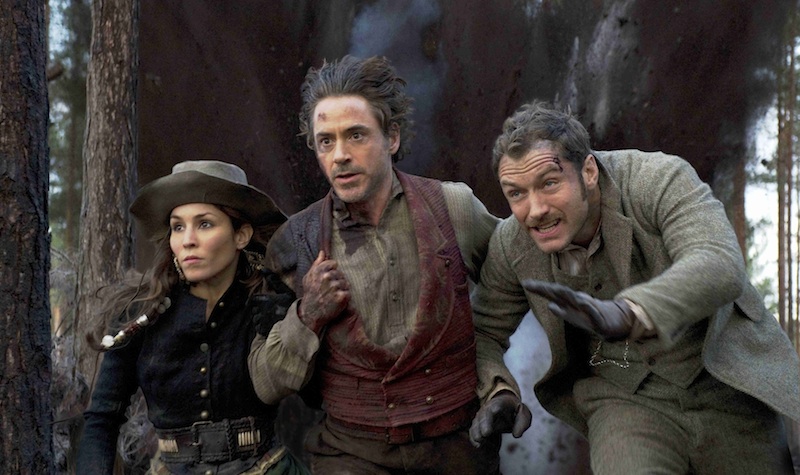
Almost nothing goes right in the second installment of Guy Ritchie’s take on Sherlock Holmes, but it’s at least consistent.  His insistence on style over substance is so heavy-handed that it’s hard to see how exactly Robert Downey Jr. can overact, and yet they both find a way to coexist.

As we hop around Europe at the end of the 19th century, Ritchie throws slow motion action sequences at us as Holmes (Downey Jr.) plans them out in his head, and then repeats roughly the same thing when he actually does them.  This kind of overly-stylized repetition shows just how little creativity was brought to the table for this sequel.  Holmes is allegedly facing his arch-nemesis, Professor Moriarty (Jared Harris), yet much of their battle of the wits contains as many explosions as a Michael Bay movie.

In between the frantically edited action sequences is a conspiracy plot to start a war so that Moriarty can sell both sides weapons.  Harris brings some welcome menace to the role, but the script, written by Michele and Kieran Mulroney, has this feeble-looking academic fist-fighting with Robert Downey Jr. by the movie’s end.

The grey-tinted European streets are chock-full of atmosphere for the characters to fight in, at least.  As with the first Holmes, the scenery, costumes and music belong in a much better movie.  Downey Jr. manages to deliver his rapid-fire take on the world’s greatest detective and still look bored, and Jude Law as his assistant/bromantic relationship Watson did far more with his one scene in Hugo.

Hopping around Europe with the happy couple is the gypsy Serza Heron (Noomi Rapace), who is there to find out what Moriarty has done with her brother.  Rapace injected what little life there was in the Swedish film version of The Girl With the Dragon Tattoo.  Here, like in the first Holmes, many of Ritchie’s other films and Hollywood studio releases in general, she is the female character that mostly sits and listens.  She gets a couple of good punches in, which is more than can be said of Watson’s new bride (Kelly Reilly), who does little more than bat her eyelashes and be offended at nudity.

That bare bottom she winces at belongs to Stephen Fry, who plays Holmes’ brother Mycroft.  Fry is the most authentic British presence in the movie, and adds a few welcome sardonic digs.  Had the movie included him for reasons other than to offend the lady, it would have at least been more bearable.

Game of Shadows is Downey Jr.’s show, though, no matter how little he or anyone else wants to actually be here.  He moves from disguise to disguise, building little on the character from the first movie and wearily avoiding the homoerotic tension that Rapace was called in to detract from.

Some of the scenes do connect in spite of the lackluster whole, though.  There’s a slow motion escape from a German prison that would’ve been dead-on had Ritchie stopped frantically toying around with the speed.  In addition to that, a sequence in Paris where Holmes is tricked by Moriarty into thinking a bomb has been planted on a stage production of Don Giovanni when it is actually in a hotel across town also stands out.  As Holmes hides under a stage prop, he finds a King piece from a chess board, and sees Moriarty’s sinister glare looking at him from a private box.

Moriarty is a villain that is described by Holmes as doing evil simply because he is capable of it.  The Dark Knight was a movie with a villain like that, and in 2008 it reached heights in quality that few imagined a big studio could still reach.  In the end, Game of Shadows‘ greatest asset is a new trailer for the next movie in that Batman series.

Grade: D
REVIEW: Red State

Red State
Directed by: Kevin Smith
Written by: Kevin Smith (screenplay)
Starring: John Goodman, Melissa Leo, Michael Parks and Kyle Gallner

Usually, Kevin Smith’s status as a writer/director mirrors that of Woody Allen.  When he’s on, most notably in Clerks, he’s dead-on and when he’s off in movies like Dogma or Cop Out, he’s just dead.  Red State marks a departure for him as a filmmaker in many ways.  First and foremost is that it’s not really a comedy outside the occasional chuckle, and second is that the grotesque happens just as much as it is talked about.

Red State is neither a total success or complete failure.  It explores a militant anti-gay Christian church in an unnamed state in Middle America.  Though the church is meant to mirror the infamous Westboro Baptist Church in Kansas, Smith distances himself from that as the church members lay down their picket signs and pick up automatic weapons.

Continue reading

REVIEW: The Future

The Future
Directed by: Miranda July
Written by: Miranda July (screenplay)
Starring: Miranda July, Hamish Linklater, David Warshofsky and Isabella Acres

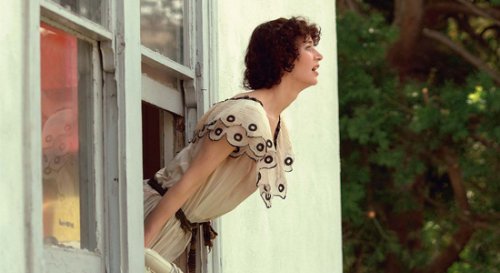
What happens to hipsters when they get old?  The writer/director/actress Miranda July would argue that there is not a true answer to that question, but it’s just a rather interesting one to ask.  In The Future, she ponders the existence of Sophie (July) and Jason (Hamish Linklater), two similar looking thirty-somethings on the brink of the end.  They have decided to adopt a cat, which they can take home from the shelter in one month.  This is a big decision for them.

In the meantime, the couple realize (after a couple of logical jumps) that this is their last true month of living.  Though the cat is likely to live only six months because of its illness, it could live as long as five years.  By then, they will be forty, and of course it’s all downhill from there.

Continue reading

REVIEW: The Princess of Montpensier

The Princess of Montpensier
Directed by: Bertrand Tavernier
Written by: Bertrand Tavernier, Jean Cosmos & Francois-Olivier Rousseau (screenplay), Madame de La Fayette (short story)
Starring: Mélanie Thierry, Lambert Wilson, Grégoire Leprince-Ringuet and Gaspard Ulliel

In America, it’s hard to write a review of a good foreign movie without feeling obligated to include an excuse for someone to watch it.  Many of the different styles in pacing and filming, in addition to the inclination toward moral ambiguity turn off audiences who favor the opposite.  The Princess of Montpensier is a lavishly filmed French spectacle chock-full of sex and gruesome violence, but injected with those aforementioned “handicaps.”

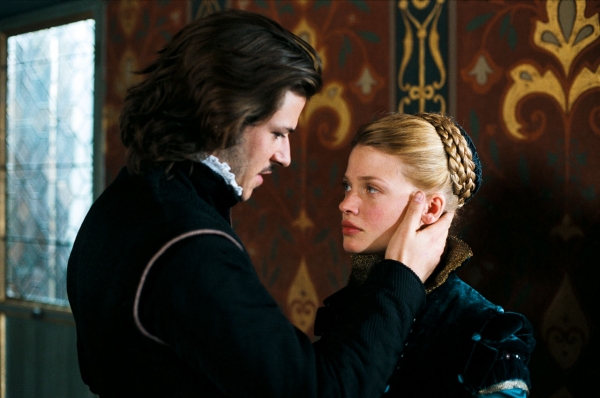
Directed and co-written with exceptional talent by Bertrand Tavernier, Princess is a period love triangle set amid the turbulent violence of the Catholic/Protestant wars of the 16th century.  It opens with an epic sequence of men on horseback slaughtering men on the ground.  This image is indicative of the unfair advantages that infect much of the rest of the story, which finds young Marie (Mélanie Thierry) married off to the wealthy prince of Montpensier (Grégoire Leprince-Ringuet) who is given favor over the man Marie truly loves, her cousin Henri de Guise (Gaspard Ulliel).

Continue reading

REVIEW: Hugo

Hugo
Directed by: Martin Scorsese
Written by: John Logan (screenplay), Brian Selznick (book)
Starring: Asa Butterfield, Chloë Grace Moretz, Ben Kingsley and Sacha Baron Cohen

Hugo would be a good place to start in a film history class.  Not only does it glide through the early history of silent movies, but it also utilizes the latest digital filmmaking technology in doing so.  Martin Scorsese has created a film worthy of the 3D technology that is infecting every big Hollywood blockbuster, and he has done it by using not as a showy gimmick, but as a storytelling tool.

Here, that third dimension immerses us in the movie’s world, drawing us into an opening sequence that transforms from turning clock gears to an overview of Paris, into a train station and finally back into the walls full of clock gears as the young boy Hugo (Asa Butterfield) zooms through these tunnels with make-shift abandon.  In one of the most finely filmed sequences of the year, Scorsese keeps track of him with a clever tracking shot that simply pans as he turns corners.  If this had been converted to 3D instead of filmed that way, you’d already have whiplash.

Continue reading

REVIEW: The Sleeping Beauty

The Sleeping Beauty
Directed by: Catherine Breillat
Written by: Catherine Breillat (screenplay), Charles Perrault (story)
Starring: Carla Besnaïnou, Julia Artamonov, Kerian Mayan and David Chausse

What a weird time it is for the movie fairly tale.  Earlier this year we received Hanna, a violent story of a young female assassin set in a phantasmagoria of Grimm’s Fairy Tales.  Still earlier, Catherine Breillat (who directed this film) gave us Bluebeard, a decidedly more subtle but still violent look at a young girl who is married off to a man who is killing off all his other wives.

In that film, we saw a girl escaping the confines of poverty and repression by running into the arms of a monster.  It was a grimy, extremely low-budget film driven more by its ideals than its aesthetics or its actors.  Breillat is an important filmmaker of exceptional talent, so the film turned out much better than it should’ve.

Continue reading

REVIEW: The Muppets

The Muppets
Directed by: James Bobin
Written by: Jason Segel & Nicholas Stoller (screenplay), Jim Henson (characters),
Starring: Jason Segel, Amy Adams, Steve Whitmire and Eric Jacobsen

The entirety of this reboot of The Muppets franchise is about why it’s necessary.  The Muppets will be duking it out with Scream 4 for the title of “Most self-reflexive movie of 2011,” and sadly it’s the same mess of mixed quality and mediocre execution.

Jason Segel and Amy Adams play Gary and Mary, two people who, along with Gary’s Muppet brother Walter (voiced by Peter Linz), attempt to get the Muppet gang back together for a farewell show.  Segel co-wrote the screenplay with Nicholas Stoller, and it’s unfortunate that such a worthy premise oddly can’t decide if it wants to be funny or not.

In structure and (sometimes) tone this reboot resembles the Seinfeld Reunion season of HBO’s Curb Your Enthusiasm.  Kermit The Frog (voiced by Steve Whitmire) joins the oddball trio to reassemble his Muppet posse, with Curb’s Seinfeld reunion line “We’ll do it in a way that won’t be lame,” being implied instead of spoken.  The Muppets are battling to be relevant, and the visual gags and several self-reflexive references are made to do battle with forced pathos instead of being front-and-center.

Continue reading

REVIEW: Margin Call

Margin Call
Directed by: J.C. Chandor
Written by: J.C. Chandor (screenplay)
Starring: Zachary Quinto, Kevin Spacey, Jeremy Irons and Paul Bettany

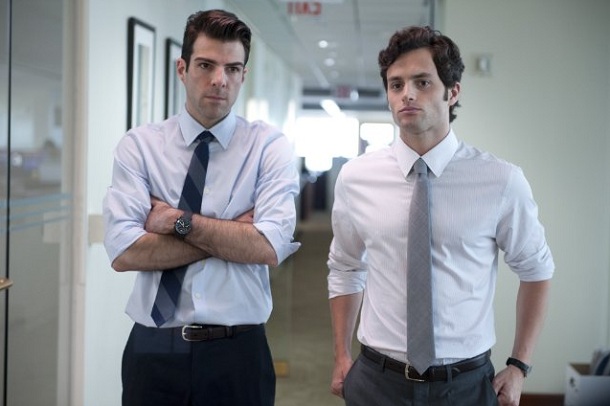
Margin Call, along with Melancholia, are two movies that are helping reshape the distribution model of otherwise-limited release films.  With the help of outlets like Amazon, iTunes and other VOD (Video On Demand, get used to it) services, they are reaching audiences that arguably would never have seen them otherwise.

Of course, it helps that both of these films are exceptionally well done.  Margin Call is about the beginning of the financial crisis, examining the movers and shakers responsible for kick-starting it.  Its keen examination of this world driven purely by gambling is shot in smooth, sophisticated darkness.  Every board room is glossed over, though every frame conveys a sense of dread and impending doom (The same can be said of Melancholia).

Continue reading

REVIEW: The Descendants

The Descendants
Directed by: Alexander Payne
Written by: Alexander Payne, Nat Faxon & Jim Rash (screenplay), Kaui Hart Hemmings (novel)
Starring: George Clooney, Shailene Woodley, Amara Miller and Nick Krause

Snap reactions and the surprised double-take have always been two important tools in George Clooney’s acting kit.  Alexander Payne is noted as a director for having actors explore realms outside of that familiar skill set.  Perhaps most infamously, Payne stripped Jack Nicholson of his raised eyebrows and charisma in About Schmidt and had the actor play a shy, desperate man.  It’s one of his best performances.

In The Descendants, Payne has Clooney blend in.  His washed-out mess of hair and beach bum attire look misplaced and familiar at the same time.  Emerging from that sly, smirky facade is an actor capable of true grit.

Continue reading