REVIEW: Begin Again

Begin Again

Begin Again 
Directed by: John Carney
Written by: John Carney
Starring: Keira Knightley, Mark Ruffalo, James Corden and Hailee Steinfeld

Begin Again is a cute, light-hearted musical with just enough bite to avoid being irredeemably fluffy. It’s a movie where I knew everyone would be all right at the end, because the main characters’ redemption arcs are so unchallenged that the story would work whether they score a hit record or not.   Dan (Mark Ruffalo) is a heavy drinking, has-been record executive with a crumbling marriage.   While down on his luck and drunk at an open mic night, he discovers Greta (Keira Knightley), a recently dumped singer/songwriter whose music becomes the driving force of their uplift (and ours).

Those character archetypes sound unbearably cliché, but writer/director John Carney’s disinterest in mining the narrative for drama proves to be an asset here. Ruffalo and Knightley have enough chemistry to make their recording sessions interesting, and it was surprising to see how exactly their relationship conflicts settled.

Continue reading

Short Takes: Guardians of the Galaxy, Lucy & more

guardians-galaxy

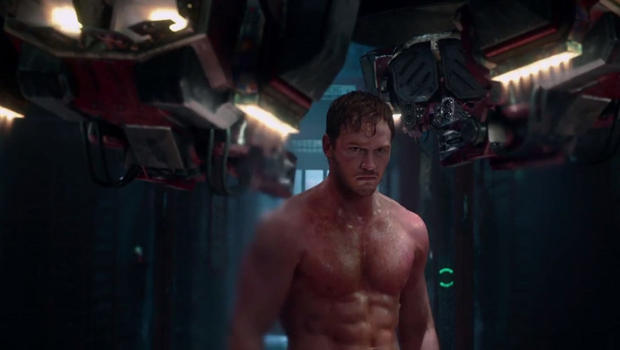
Guardians of the Galaxy- The best way I can think of describing James Gunn’s Guardians of the Galaxy is dropping Nathan Drake from the Uncharted video games into the Mass Effect universe.  As is almost always the case with the endless bombardment from the Marvel film juggernaut, I also find myself trying to focus on the things that make this slightly different from its many siblings.  Guardians is marketed as the black sheep in the family, but its knowing digs at superhero movies don’t compensate for the fact that it is basically a completely formulaic superhero movie with a fantastic soundtrack.

Chris Pratt turns his leading man charm up to 11 as Peter Quill, but Gunn and Nicole Perlman’s script sometimes focuses on it to an annoying degree (hence the Uncharted comparison). Marvel’s latest sensory assault is aided by the fact that it delays its conventionally filmed and edited Final Battle Sequence in favor of protagonists that aren’t completely generic. (The villains are very generic).  Bradley Cooper is especially great as the voice of Rocket Raccoon, and the movie could have benefited from giving other inspired turns from Benicio del Toro and Glenn Close more screen time.   Grade: C-
j4b3g305e1nl-is-scarlett-johansson-s-lucy-just-going-to-do-this-the-entire-movie

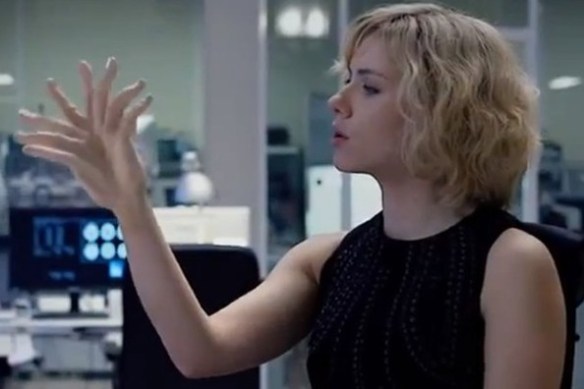
Lucy- There is a great scene in Luc Besson’s Lucy, one of my favorites of the year, actually.  In it, the title character (Scarlett Johansson) calls her mother to talk about the strange wave of sensations flooding over her now that a drug has unhinged her brain’s capability.  It’s a masterful sequence shot in an unnervingly close proximity to Johansson’s expressive, increasingly other-worldly performance. (It’s her second one of those this year, by the way.) 

The rest of the movie, sadly, is an onslaught of occasionally memorable images and half-baked ideas that don’t stick. Lucy is a thrilling character to watch discover herself, but the directions the movie stretches her don’t carry much weight because it seems like a sprint to the finish.  I got the impression that Besson got to make the movie he wanted to make but not enough of it, and that with a little more time the preposterous conceit at the story’s center would have been taken to more exciting metaphysical extremes than the ones that are here.   Grade: C

obvious-child-140330_g_jenny_jake_bar_small_wide-0ead5c9531dccc29ef7bef51c7683dbb88c95735-s6-c30

Obvious Child- Gillian Robespierre’s Obvious Child is a kind of revolutionary fluff, a love story with many typical rom-com moments that’s also a rambunctious corrective to movies like Juno and Knocked Up. (spoilers ahead) Jenny Slate gives one of the year’s great breakout performances as Donna, the New York comedian who gets pregnant and expects everyone to attack her for wanting an abortion.   Knowing most mainstream depictions of abortion in film and TV, she has a reason to fear for her life, though the movie is daring because it depicts it as a viable option that allows Donna to go on without trauma or death.

Slate’s performance is lively enough to counteract some of the script’s weaker scenes, like an unnecessary, surprisingly unfunny encounter with an older comedian played by David Cross.  She excels at spitting Robespirerre’s venomously funny dialogue while subduing the story’s gooier center.   The movie heralds the arrival of a sharp comic voice and excels even more because of her energetic, hilarious screen presence.  Grade: B-
life-itself

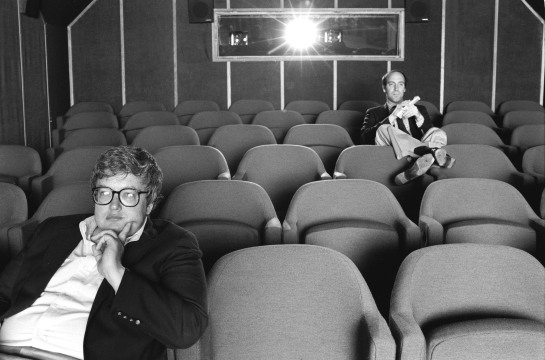
Life Itself- I’m sure I’m not the only one who went into this knowing that I would cry.  As Werner Herzog puts it in the movie, Roger Ebert was such a “soldier of cinema” that his enthusiasm about the movies he really loved remains contagious.  He was a prolific, honest writer about movies and, especially in his later years, about a great deal of other things as well.

Life Itself, directed by Steve James and based on Ebert’s memoir, is a loving but not overly adoring tribute to the critic.  Judging by the frankness in his personal writing, I think he would have liked that the movie doesn’t shy away from his struggles and others’ criticisms of him.  James constructs Ebert’s life story around his decline, interspersing standard talking head and archival footage with painful depictions of how the Pulitzer Prize-winning writer spent his final years battling thyroid cancer.  The movie doesn’t lean too hardly on those health problems, though.  The segments that focus on his two greatest relationships, with his wife Chaz and his on-screen sparring partner Gene Siskel, are both heart-warming and very funny.   Grade: B+  (Thumbs Up)


REVIEW: A Most Wanted Man

a-most-wanted-man

A Most Wanted Man
Directed by: Anton Corbijn
Written by: Andrew Bovell (screenplay), John le Carré (novel)
Starring: Philip Seymour Hoffman, Grigoriy Dobrygin, Rachel McAdams and Robin Wright

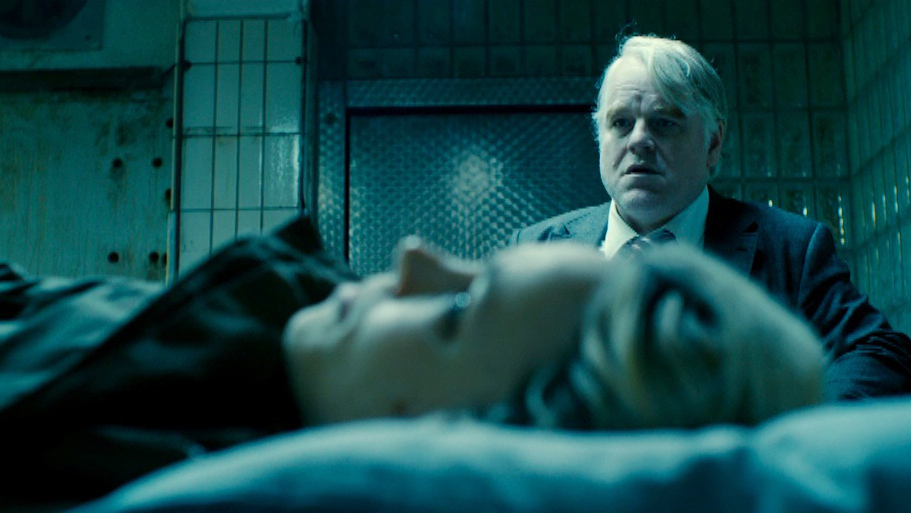
Though this John le Carré adaptation switches between being a generic spy caper and a thrilling one, it was a great moviegoing experience for me simply because it was the last new movie I’ll ever see with Philip Seymour Hoffman in a leading role.  Yes, he’ll return as a supporting player in the final Hunger Games installment(s), and his debut in the last movie was filled with promise; but this is his last time at center stage, and I’m glad (but not surprised) that he knocks it out of the park.

A Most Wanted Man, directed by Anton Corbijn, is several steps behind the flashes of mastery in Tomas Alfredson’s take on le Carré’s Tinker Tailor Soldier Spy, and it even copies many of the visual elements used in that movie.  There are brightly colored rooms filled with drab spies speaking cryptically, and windowless, deglamorized operation hubs that felt lifted from the world of Alfredson’s film.  Though both movies benefit greatly from fantastic central performances, A Most Wanted Man’s winding, post-9/11 paranoia narrative doesn’t establish character nearly as well.

Continue reading

REVIEW: Ida


ida

Ida
Directed by: Pawel Pawlikowski
Written by: Pawel Pawlikowski and Rebecca Lenkiewicz
Starring: Agata Trzebuchowska and Agata Kulesza

Pawel Pawlikowski’s Ida is a road movie imbued with a calm, tragic stillness.  The story is set in early 1960s Poland, but its atmosphere is a more timeless evocation of post-World War II pain, where smoky lounge bars feel like a distraction from still unhealed national wounds.  Anna (Agata Trzebuchowska), a novitiate nun preparing to take her vows, is largely sheltered from that world, until she’s instructed to learn more about her past by visiting Wanda (Agata Kulesza), her aunt and only known living relative.

(Spoilers ahead) Not long after she meets Wanda, Anna finds out she’s Jewish, and her real name gives the movie its title. Her family was slaughtered in the war by someone they thought was a friend, and she was spared, taken to a Catholic orphanage as a baby and raised without that knowledge. Throughout the story she is by turns petrified and embarrassed; petrified at the tragic turns of her journey of self-discovery, and embarrassed both by and for her aunt, who lives a very different life than that of a nun-in-waiting.

Continue reading

REVIEW: Dawn of the Planet of the Apes

la_ca_0403_dawn_of_planet_apes_027

Dawn of the Planet of the Apes
Directed by: Matt Reeves
Written by: Rick Jaffa, Amanda Silver & Mark Bomback (screenplay), Pierre Boulle (novel)
Starring: Andy Serkis, Jason Clarke, Gary Oldman and Keri Russell

(Spoilers throughout) 

Aside from a prologue where the spread of a humanity-eradicating virus plays out in mock news footage projected on a map of the globe, Dawn of the Planet of the Apes begins and ends with the same pair of enraged eyes.  Those eyes will be familiar to anyone who saw the spectacular first installment of this rebooted series, 2011’s Rise of the Planet of the Apes.  They are Caesar’s, the ape brought to inquisitive, now-domineering life in yet another astonishing motion capture performance by Andy Serkis.

Part of what made Rise such a thrill was they way it surrounded its outbursts of action-movie violence with an emotionally resonant, elegiac beauty.  CGI apes were utilized not just as disposable bodies for battle scenes, but as characters even more important than the humans.  Images of young Caesar sitting at a piano with an old man with Alzheimer’s, or a horde of freed apes swinging through rustling trees as pedestrians stop on the street to look up are just as memorable as the incredible action set piece on The Golden Gate Bridge.  It was a summer blockbuster that insisted on taking its time, making its big finale (and the shouting of the word “No!”) all the more rousing.

Continue reading

REVIEW: Snowpiercer

primary_Snowpiercer-2013-1

Snowpiercer
Directed by: Bong Joon-Ho
Written by: Bong Joon-Ho and Kelly Masterson (screenplay), Jacques Lob, Jean-Marc Rochette and Benjamin Legrand (graphic novel)
Starring: Chris Evans, Song Kang-Ho, Octavia Spencer and Tilda Swinton

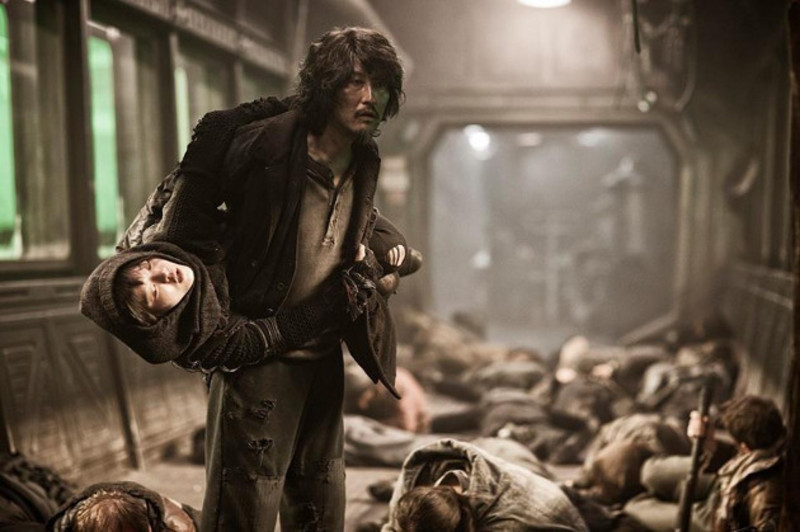
In Snowpiercer, Bong Joon-Ho and his production crew do something that is incredibly important in sci-fi films: they’ve mapped out a vision of their world down to every minute detail.  This is where, for the most part, other recent films that attempt to show the horrors of tomorrow go wrong.  Divergent and The Hunger Games films are competently made and their action sequences are sometimes thrillingly executed, but their generic, uninspired dystopias are almost interchangeable when arrows and bullets aren’t flying.

Snowpiercer is by no means a perfect film, but it is a transporting one.  Its success is in its environment, in its imagining of a  train that appears to be all that is left of civilization after an attempt to thwart global warming ended up freezing Earth and killing off nearly everything.  Here a person’s value in society is, for the most part, measured by how close they are to the engine. (Spoilers ahead) Someone at the tail of the train can have their arm frozen off for protesting when their child is dragged away for work, while those in the front eat sushi and have access to a train car that is a huge night club.

Continue reading

Short Takes: Edge of Tomorrow, X-Men: Days of Future Past, Only Lovers Left Alive & More

edge-of-tomorrow-movie-trailer

Edge of Tomorrow- This Tom Cruise action vehicle, directed by Doug Liman, is an occasionally thrilling summer spectacle.  Cruise plays Cage, a military talking head who is thrust into a world of combat that he isn’t prepared for.  The movie utilizes Normandy invasion imagery to ground its sci-fi trappings.  Cage is a man doomed to repeat the same beach invasion every time he is killed in combat.  He and Rita (a terrific Emily Blunt) are tasked with stopping the aliens from massacring everyone on Earth, restarting their mission every time Cage dies.

Liman keeps Cage’s repeating day varied, but occasionally indulges in redundant beach combat sequences.  The movie doesn’t develop its romance subplot well enough to create a satisfying payoff at the end, but Cruise and Blunt are reliably strong screen presences so it still sort of works.  Grade: C

Continue reading

REVIEW: Maleficent

Maleficent

Maleficent
Directed by: Robert Stromberg
Written by: Linda Woolverton
Starring: Angelina Jolie, Elle Fanning, Sharlto Copley and Lesley Manville

There’s a very disturbing scene in the first half of Maleficent; one of the most disturbing I can recall seeing in a modern movie rated PG.   (Spoilers ahead) The title character, embodied with regal menace by Angelina Jolie, is sitting in the woods with who, up until this point, has been her One True Love.  At the request of the king, who was wounded by the horned fairy in an earlier skirmish near the border of their two realms, this man drugs Maleficent on their date so he can chop off her wings.  For a movie that aims to rewrite the squeamish gender politics of the 1959 Disney cartoon, a scene like that becomes even more disturbing because of the kid-friendly rating.

Jolie dominates the movie from the moment she flies on screen.  Director Robert Stromberg gives her every opportunity to glare, smirk and otherwise chew through the mediocre screenplay.  This is a Disney-fied take on the Oz update Wicked, retelling the story of Sleeping Beauty so that the villain’s motives are sympathetic.  However, her screen presence clashes violently with the overly whimsical Elle Fanning, who plays Aurora.   This is even more noticeable because Maleficent and Aurora’s interactions are at the center of the story here.  There is a scene where Maleficent’s brooding by a forest pond at night while nearby, neon rainbow fairies dance around the cursed teen princess while she violently giggles.

Maleficent 2

In that crucial cursing scene, Stromberg creates an almost identical real-life staging of the cartoon.  Maleficent storms through the castle’s main hall as the “good” fairies bless the newborn princess.  Jolie is at her menacing, over-the-top best here, making her former flame (now the king) quake in his boots and beg for her not to curse his daughter.

As that king, Sharlto Copley isn’t in the same league as Jolie.  Her sinister inflections add an odd calm to the CGI overkill.  His obnoxious performance is only matched by the trio of young fairies that raise Aurora after the curse.  This was especially disheartening given that two of them are played by Lesley Manville and Imelda Staunton, two incredible actresses who are given only tired, broad comedy scenes here.

Much like Wicked, perspective is this movie’s subject and knowledge of the original story (or in this case, the Disney cartoon of the original story) is key to appreciating it.   The many, varied contradictions further damper that appreciation. The boisterous performances of Copley, Fanning, et al don’t mesh with Jolie or the pensive, steady way Stromberg tries to tell much of Maleficent’s story.  Action sequences that bookend the movie competently illustrate the industrial patriarchy versus Mother Nature conflict, but also feel at odds with the tone of everything in between.  Maleficent rests on the horns of its star, and nearly every single other aspect undermines that.

Grade: C-

REVIEW: Godzilla

Godzilla

Godzilla
Directed by: Gareth Edwards
Written by: Max Borenstein (screenplay), Dave Callaham (story)
Starring: Aaron Taylor-Johnson, Elizabeth Olsen, Bryan Cranston and Ken Watanabe

The 1998 iteration of Godzilla will always hold a special place in my 7-year-old heart.  It is one of the first PG-13 movies I remember seeing in the theater, and the first thing I wanted to do afterward was go out and buy all of the Godzilla toys (yay, product tie-ins!).  Of course, watching that version years later isn’t good for much else but that memory.

Because of that movie, however, I also rented countless other old Godzilla movies, where the nuclear dinosaur faced off against city-eradicating nemeses like Mothra, Rodan, Bollante, Gigan, Mechagodzilla and, of course, King Kong.  I watched those showdowns indiscriminately alongside the English language remake of the original, reenacting the battles with toys and imagined skyscrapers.

Continue reading

REVIEW: Neighbors

neighbors-movie-photo-3

Neighbors
Directed by: Nicholas Stoller
Written by: Andrew J. Cohen and Brendan O’Brien
Starring: Seth Rogen, Rose Byrne, Zac Efron and Dave Franco

Seth Rogen and Rose Byrne are disarmingly excellent in Neighbors.  Their performances are so fluid and in sync that they take what would otherwise be an amusing, sometimes audacious series of physical gags and ground it with their portrait of a convincing young marriage. The poster sells a macho showdown between a millennial frat boy (Zac Efron) and a pothead-turned-dad (Rogen), and while that feud is very much at the core of the movie Byrne’s character is in on the raunchy scheming, too.

Andrew J. Coehn and Brendan O’Brien’s script switches effortlessly between the two worlds next door to each other.  Mac (Rogen) and Kelly (Byrne) are a younger couple who moved to suburbia to “grow up.”  Not long after they move in, Teddy Sanders (Efron) and his frat brothers turn the house next door into a non-stop rave.  The movie leans heavily on their somewhat elaborate frat party set pieces, with a blacklight rave and Robert DeNiro-themed mixers.

Continue reading