BEST PICTURE NOMINEE: 12 Years a Slave

TWELVE YEARS A SLAVE

12 Years a Slave
Directed by: Steve McQueen
Written by: John Ridley (screenplay), Solomon Northup (memoir)
Starring: Chiwetel Ejiofer, Michael Fassbender, Lupita Nyong’o and Sarah Paulson

Connecting 12 Years a Slave immediately to its Oscar buzz because of when a studio chose to release it would be a disservice to it.  To put it simply, this is the most powerful film about American slavery that I’ve ever seen, and diminishing that accomplishment by asking if the white male establishment of the Academy can handle it enough to award it with anything is at the bottom of my list.

Steve McQueen’s previous two features, Hunger and Shame, were visually brilliant, but at times lacking a crucial human element.  This was especially true of Shame, whose miserabalism was supposed to be its own profound reward but ultimately registered as empty.  There is obviously a great deal of suffering in 12 Years a Slave, but also an intense humanity.

Continue reading

BEST PICTURE NOMINEE: Gravity

gravity

Gravity
Directed by: Alfonso Cuarón
Written by: Alfonso Cuarón & Jonás Cuarón
Starring: Sandra Bullock and George Clooney

Alfonso Cuarón’s Gravity is a supreme technical achievement and a standard, if mostly engaging, story.  When I saw it for the first time, in IMAX and in 3D, I was astounded at the craftsmanship of some scenes but had an underlying “meh” about everything else.  After returning to the movie in theaters again, this time in a standard theater with the standard two dimensions, the flaws only became larger.

As Richard Brody aptly put it in The New Yorker:

Cuarón has done a formidable job of piecing together a plausibly coherent material world of space, of conveying the appearance of that setting and the sensations of the characters who inhabit it. But he has created those sensations generically, with no difference between the subjectivity of his characters and the ostensible appearance to a camera of those phenomena. He offers point-of-view images that are imbued with no actual point of view.

The movie works as well as it does because of the audience’s built-in history with Sandra Bullock, who plays Dr. Ryan Stone, a woman who is having a really bad day trying to get back to Earth after a space station accident.  Bullock carries the movie quite well, and is aided in parts by the effortless charm of George Clooney’s on-screen persona.

Continue reading

BEST PICTURE NOMINEE: Her

her

Her
Directed by: Spike Jonze
Written by: Spike Jonze
Starring: Joaquin Phoenix, Scarlett Johansson, Amy Adams and Rooney Mara

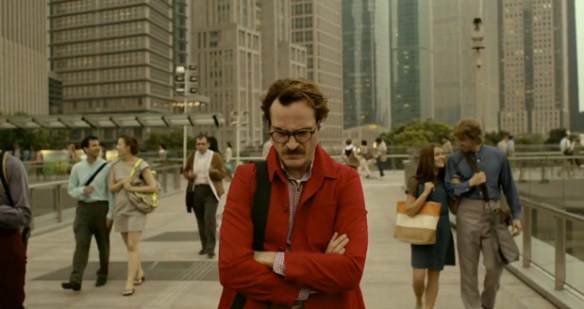
Her is a beautifully realized and often moving story of an impossible relationship.  It’s not just about a man who falls in love with his operating system, but instead uses that premise to springboard into a vast array of heady topics.  Spike Jonze dares to imagine an absurd romance with sincerity and depth of feeling, and in doing so makes the physical world of the future seem like a limited if beautiful place.

Theodore (Joaquin Phoenix) at first seems like a typical protagonist in a modern male-centered romance like (500) Days of Summer or Garden State.  He is a sensitive writer whose skills with women demand a Manic Pixie Dream Girl to set things right. His new fully aware OS Samantha (voiced by Scarlett Johansson) seems to be that “girl” but instead becomes a sly critique of the archetype.

Samantha’s worldview transforms so thoroughly beyond Theodore’s comprehension by the end that her “human” traits and relationships are a miniscule part of what she is.  At first he is her window into the world, as he carries her around in his dress shirt pocket and lovingly answers her every question.  She is not a real woman, though, just like the women in those other previously mentioned movies.  However, Samantha is intangible not because of the male flimmaker’s narrow vision but because her intelligence is very nearly limitless and far surpasses the limitations of humanity.

A fully-functioning and feeling AI is right at home in the movie’s glossy take on future Los Angeles.  This is a place where computers can effortlessly copy penmanship and every interior looks like a modern art museum.  It’s also a world where relationships, conventional or not, don’t work.  Theodore buys the OS seemingly out of the blue.  He’s going through a divorce, and when his ex-wife (Rooney Mara) finds out about Samantha, she doesn’t hesitate to stick the knife in.

“You always wanted a wife without the challenges of dealing with anything real, I’m glad that you found someone” she says through her teeth.

Her movie

And yet, for all its gentle lecturing, Theodore and Samantha’s relationship is more emotionally and sexually charged than in most movies where you see both parties.  Many on-screen romances, largely because of the audience-friendly PG-13 rating, rarely bother with actual sex.  Her is rated R, because even though the sex scene is told from Samantha’s point of view (black screen), you can hear everything.

It’s impossible not to see Scarlett Johansson when she’s talking as Samantha.  It’s a sly joke to cast the woman who is so often used as eye candy (ahem, The Avengers) as a sexy Siri.  Her voiceover, which she nails, is so crucial to the movie’s success, as is the chemistry with Joaquin Phoenix, who gives an off-kilter, emotionally rich performance in the lead.  Amy Adams is also excellent as Theodore’s supportive friend.

Jonze starts to tread water with the premise in the last third of the movie, and though the theme “only humans can be human” is beaten to death in science fiction, it doesn’t feel stale in such a funny, moving film like this.  The future he and his crew have created is also far and away one of the most optimistic I’ve ever seen in a movie, a far and welcome cry from the generic dystopian nightmares that seem to be released every weekend.

Several changes of scenery don’t completely save the monologue-heavy screenplay, though.  I have a feeling if Jonze had again collaborated with Charlie Kaufman and have him run away with this idea, it would have been a masterpiece. That’s not to say what’s here is even remotely close to bad, though.  This is a perceptive, engaging and completely sincere romance, a rarity in American movies before you add on its amazingly realized near-future L.A.

Grade: B
BEST PICTURE NOMINEE: Nebraska

nebraska

Nebraska
Directed by: Alexander Payne
Written by: Bob Nelson
Starring: Bruce Dern, Will Forte, June Squibb and Bob Odenkirk

The most endearing image of Alexander Payne’s Nebraska is of an old man stubbornly trudging along the highways and sidewalks of rural America.  The camera is placed a patient distance in front of him, not sighing at his pace but simply waiting for him to catch up.  That distance is indicative of the relationship that that man, Woody Grant (Bruce Dern), has with the rest of the world.  He’s quietly stubborn, wearing a look of defeat as his default expression.  His son David (Will Forte) sees that and pities him.

Pity is the main engine that drives Nebraska’s sparse story, which Payne makes incidental to character and landscape.  Woody is walking from Montana to Lincoln, Nebraska to cash in a $1 million slip he got from a sham marketing company.  His wife Kate (June Squibb) can do little but throw her hands up in the air in exasperation at his repeated attempts to walk there (his license was revoked).

Continue reading

REVIEW: The Lego Movie

lego-a-2

The Lego Movie
Directed by: Phil Lord & Christopher Miller
Written by: Phil Lord & Christopher Miller (screenplay & story), Dan Hageman & Kevin Hageman (story)
Starring: Chris Pratt, Elizabeth Banks, Will Ferrell and Morgan Freeman

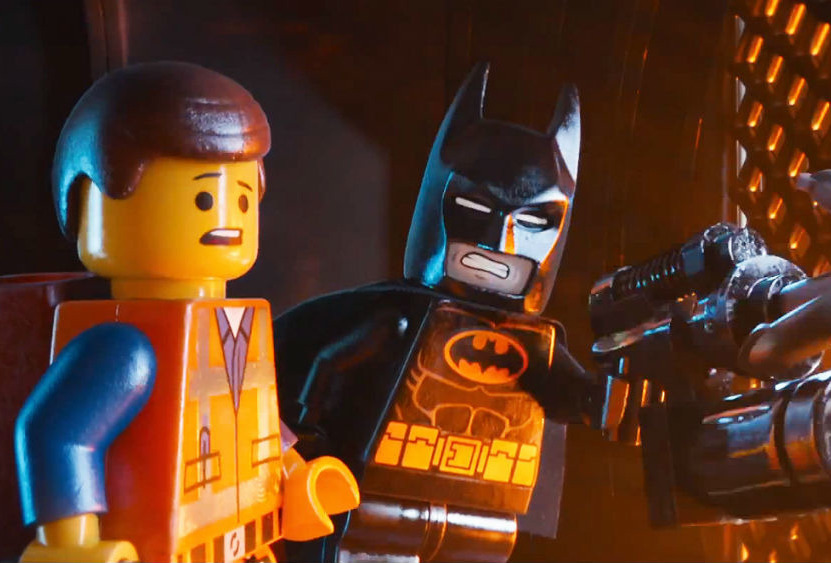
The two things that The Lego Movie most immediately recalls are the South Park “Imaginationland” episodes and Team America: World Police, biting pop cultural critiques from Trey Parker and Matt Stone. The Lego Movie is, obviously, much more toned down and targeted at children (there is no MPAA trolling “sex” scene like the marionette one in Team America).  What exactly the movie seems to be satirizing becomes a bit watered down by the hypocrisy of its own design.

It starts off in a Lego world that George Orwell or Ray Bradbury may have built, where the inhabitants all follow the instruction manuals or risk being melted by President Business (Will Ferrell).  The Lego Movie is not (and cannot) be totally anti-business, though.  President Business eventually becomes Lord Business who eventually becomes (spoiler) a micromanaging dad in the human world telling his kid not to mess with immaculately constructed (and unimaginative) Lego buildings.  The movie is designed to show how much fun a dad and son can have with (spoiler) Legos!  The movie is more pro-child imagination, though I’m sure all Legos made after this movie will still come with instructions.

Continue reading

BEST PICTURE NOMINEE: The Wolf of Wall Street

the-wolf-of-wall-street-official-extended-trailer-0-624x415

The Wolf of Wall Street
Directed by: Martin Scorsese
Written by: Terrence Winter (screenplay), Jordan Belfort (book)
Starring: Leonardo DiCaprio, Jonah Hill, Margot Robbie and Kyle Chandler

One of the biggest bright spots in this year’s Oscar nominations is the amount of prestige bestowed on a three-hour spectacle of almost non-stop vulgarity.  I have a pretty good feeling that Martin Scorsese’s The Wolf of Wall Street is nominated simply because of the pedigree of talent involved.  It is almost as polarizing (and misunderstood) as Shutter Island, which probably would have been nominated had it been released during awards season.

Scorsese, whether or not he likes it, is an Oscar mainstay now, and would likely have to tank in an almost unfathomable way to not get attention from the voters.  The Wolf of Wall Street looks kind of like an Oscar film on the surface, but it’s also everything that they typically dislike:

It’s a comedy.  It’s a black comedy.  It’s not self-serious.  It’s three hours and not about World War II or ancient history.

Continue reading

BEST PICTURE NOMINEE: Dallas Buyers Club

Dallas-buyers-club

Dallas Buyers Club
Directed by: Jean-Marc Vallée
Written by: Craig Borten and Melisa Wallack
Starring: Matthew McConaughey, Jared Leto, Jennifer Garner and Denis O’Hare

Matthew McConaughey and Jared Leto play polar opposites brought together by the horrors of AIDS in Dallas Buyers Club, an unsettling message movie that doesn’t want to admit it’s a message movie.

As the unsparing homophobe Ron Woodroof, McConaughey takes his natural on-screen charm to a demented new register here.  First seen at the center of a sweaty threesome at a rodeo, it’s not long before he’s slinging the word “faggot” in a locker room with his pals.  It’s also only a matter of minutes before he’s sitting in a hospital, being told that his T-cell count is so low he has 30 days to live.  When his doctor asks him if he’s had gay sex, he goes into a fit of rage.

Continue reading

Short Takes: Inside Llewyn Davis, The Hunt, Mitt

INSIDE LLEWYN DAVIS

Inside Llewyn Davis- The Coen Brothers’ first film since 2010’s True Grit is sardonic and strange, and at times very moving.  The most apt description I’ve read about it was “Sisyphus gets a cat,” which perfectly encapsulates the existential yet playful journey that the title character (Oscar Isaac, robbed of an Oscar nod) is destined to be on forever.  Llewyn Davis is a folk singer, but not good enough to make a living at it.  He’s cute, but his personality is too prickly to be likable.

Thanks to a wonderful score with music by no less than T-Bone Burnett, this is the Coens’ prettiest sounding movie.  This is also one of their prettiest-looking (hat tip to cinematographer Bruno Delbonnel), capturing a dimly lit, antique vibe that feels perfect for Greenwich Village, 1961.  Grade: B+

Continue reading

BEST PICTURE NOMINEE: Philomena

Philomena2

Philomena
Directed by: Stephen Frears
Written by: Steve Coogan & Jeff Pope (screenplay), Martin Sixsmith (book)
Starring: Judi Dench, Steve Coogan, Sophie Kennedy Clark and Mare Winningham

Though Philomena is about a journalist writing a human interest story, it is thankfully absent the easy emotional payoff that such stories are often intended to have.  That reporter, Martin Sixsmith (Steve Coogan), hates the idea of writing a fluff piece, but he’s looking to occupy his time after being canned from a job as a government mouthpiece. (Ironically, that involves quite a bit of fluff).

Director Stephen Frears wastes little screen time before thrusting Sixsmith and the movie’s real protagonist, Philomena Lee (Judi Dench), together for the article.  Philomena is a cheery old Irish Catholic woman looking to connect with a son that she had out of wedlock.  Her family dropped her off at a convent, where she was held in servitude and only allowed to see her son for one hour a day.  Then, he was sold to an American family for adoption.

Continue reading

BEST PICTURE NOMINEE: Captain Phillips

tom-hanks-captain-phillips-richard

Captain Phillips
Directed by: Paul Greengrass
Written by: Billy Ray (screenplay), Richard Phillips (book)
Starring: Tom Hanks, Barkhad Abdi, Barkhad Abdirahman and Faysal Ahmed

The final scenes in Captain Phillips are some of the most disturbing and haunting of the year.  They also somewhat erase the good guy/bad guy mentality and replace it with raw humanity. (Spoiler ahead) They involve Richard Phillips (Tom Hanks) screaming his head off while covered in the blood of recently-killed Somali pirates who were holding him hostage.  It is a raw portrayal of trauma, and it resonates more than anything else in this taut if mostly unsubstantial movie.

Like Gravity, Paul Greengrass’ latest film operates on the built-in history audiences have with its Hollywood star.  Hanks doesn’t disappear into the title character as much as he uses his image to enhance the terror of the situation.  It’s the actor we are meant to see struggle with a pirate raid on his cargo ship while traveling off the African coast.  Those last scenes in particular are crucial reminders of that.

Continue reading