REVIEW: The Hangover Part III

hangover-3-trailer

The Hangover Part III
Directed by: Todd Phillips
Written by: Todd Phillips & Craig Mazin (screenplay), Jon Lucas & Scott Moore (characters)
Starring: Bradley Cooper, Ed Helms, Zach Galifianakis and Ken Jeong

Is there any point in trying to look at The Hangover Part III as anything but a petulant piece of filth?  Of course the answer is no, but in a franchise built on uncompromising filth, that isn’t necessarily all bad.  Make no mistake, though: this is a very bad movie.  The story abandons the “What did we do last night?!” set up of the first two installments, and apparently can’t survive without it.

There are scenes of abduction and violence conducted with small crowds of people looking on in the background of the shots.  Several characters are shot and killed and the every men at the center of the story are hardly affected.  And yet, there is a kind of demented charm to this final installment as we get a sense that director Todd Phillips is almost daring us to try and make sense of a series built on sacrificing coherence for gross-out.  With the aid of his three main stars, Bradley Cooper, Ed Helms and Zach Galifianakis, and a slew of others, he has created a movie that exists as a series of gags barely connected by anything other than familiar faces.

Continue reading

REVIEW: Star Trek Into Darkness

star trek into darkness 650 paramount

Star Trek Into Darkness
Directed by: J.J. Abrams
Written by: Roberto Orci, Alex Kurtzman & Damon Lindelof (screenplay), Gene Roddenberry (TV series)
Starring: Chris Pine, Zachary Quinto, Zoe Saldana and Benedict Cumberbatch

The second installment of J.J. Abrams’ Star Trek reboot checks all the necessary boxes to make it an effective summer blockbuster, which is its biggest problem.  It feels like a laundry list of co-mingling plot points and action set pieces, more calculated business venture than artistic Enterprise.  Abrams is a good enough ringleader that all the pieces fall together nicely and the high tech toys he gets to play with are a good action showcase, but the movie will fizzle away when a new good enough sci-fi blockbuster opens in a couple weeks to take its place.

Into Darkness, despite its heftier title, is not a plunge into darker territory, as second franchise installments often are.  Sure, one of the series’ most famous villains, Khan (Benedict Cumberbatch), surfaces, but it feels just as light on its feet as Abrams’ 2009 reboot.  The best thing about it is still the chemistry between Kirk (Chris Pine) and Spock (Zachary Quinto), whose humorous ideological clashes provide the movie with much of that lightness.  There are exceptional action sequences, including an astonishing sequence of space diving to an enemy ship, but they aren’t nearly as entertaining as watching Spock attempt a romantic relationship with Uhura (Zoe Saldana).

Continue reading

REVIEW: Trance

186-TRANCE-PS (2).tif

Trance
Directed by: Danny Boyle
Written by: Joe Ahearne and John Hodge (screenplay)
Starring: James McAvoy, Rosario Dawson, Vincent Cassel and Danny Sapani

There is too much plot packed into too little time to really care what happens to anyone in Trance.  Danny Boyle’s kinetic sense of motion goes nicely with the neon filtered beauty of the cinematography and the acting is uniformly decent, but the story is flawed simply by the way it is designed to try and outfox the viewer.  Its largely backward moving narrative makes it play kind of like Memento, though the endless backpedaling and plot reveals are more nauseating than gasp-inducing.

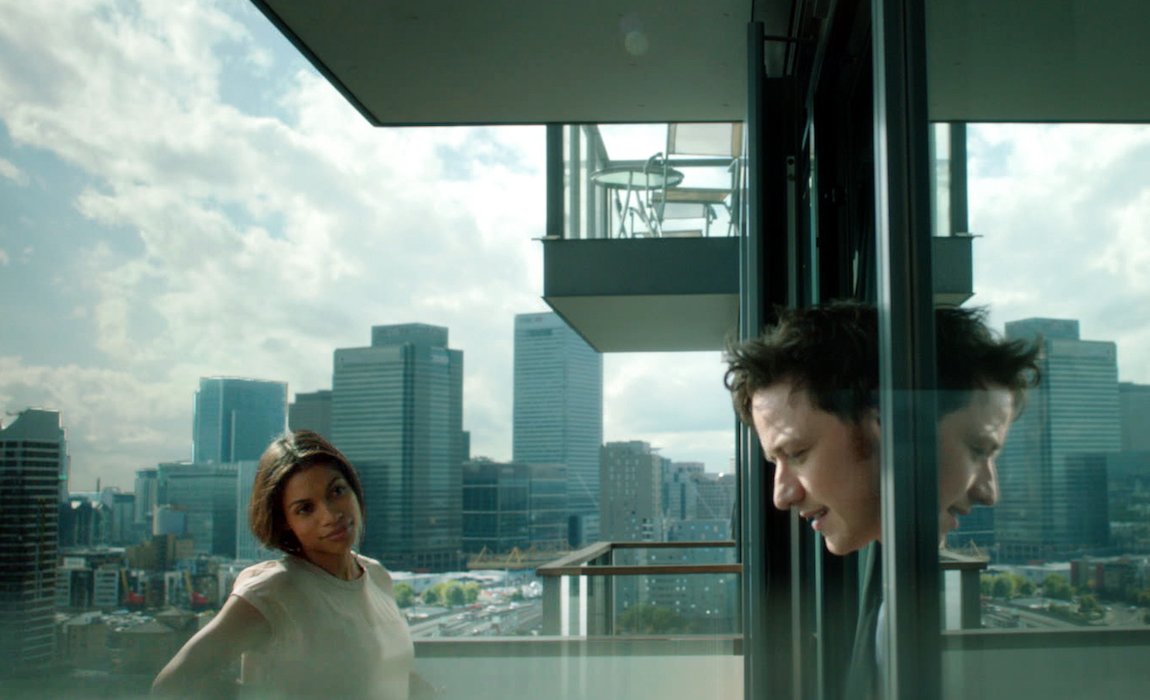
Simon (James McAvoy) works at a high end art auctioning company in London when a big heist goes down, leaving him with a gun butt to the head and a nasty case of amnesia.  We quickly learn that he is in on the plot, and that the Goya painting that he helped Franck (Vincent Cassel) and co. steal is still missing.  After a brutal bit of fingernail pulling, Franck gets the brilliant idea to send Simon to a hypnotist (Rosario Dawson) to try and pry out the whereabouts of that extremely valuable painting.

That mostly sets up Trance’s plot, though from there it is an endless spiral into incoherence.  Joe Ahearne and John Hodge’s screenplay is aggressively sloppy, and Boyle attempts the impossible task of trying to gloss over that.  During its frantic 100 minutes, the movie attempts to double- and triplecross viewers into narrative submission.  The hypnotist has a romantic past with both of the main characters though one springs completely out of nowhere, and her relationship with Simon is overtly hinted at from the very beginning and then supposed to be a big reveal. Both exist as an excuse to patch up weak plot with nudity, which is what the movie also does with violence.

By jumbling the narrative’s structure and trying to tell the story both backward and forward, Trance becomes a jumbled assault of pretty images, graphic violence and wayward hallucinations that try to come together but don’t.  It is designed to be one of those movies that you need to see twice to “get,” but I can’t imagine anyone wanting to see it again.

Grade: D+

REVIEW: The Great Gatsby

A290_L003_120245.0003106_R4.DNG

The Great Gatsby
Directed by: Baz Luhrmann
Written by: Baz Luhrmann and Craig Pearce (screenplay), F. Scott Fitzgerald (novel)
Starring: Leonardo DiCaprio, Tobey Maguire, Carey Mulligan and Joel Edgarton

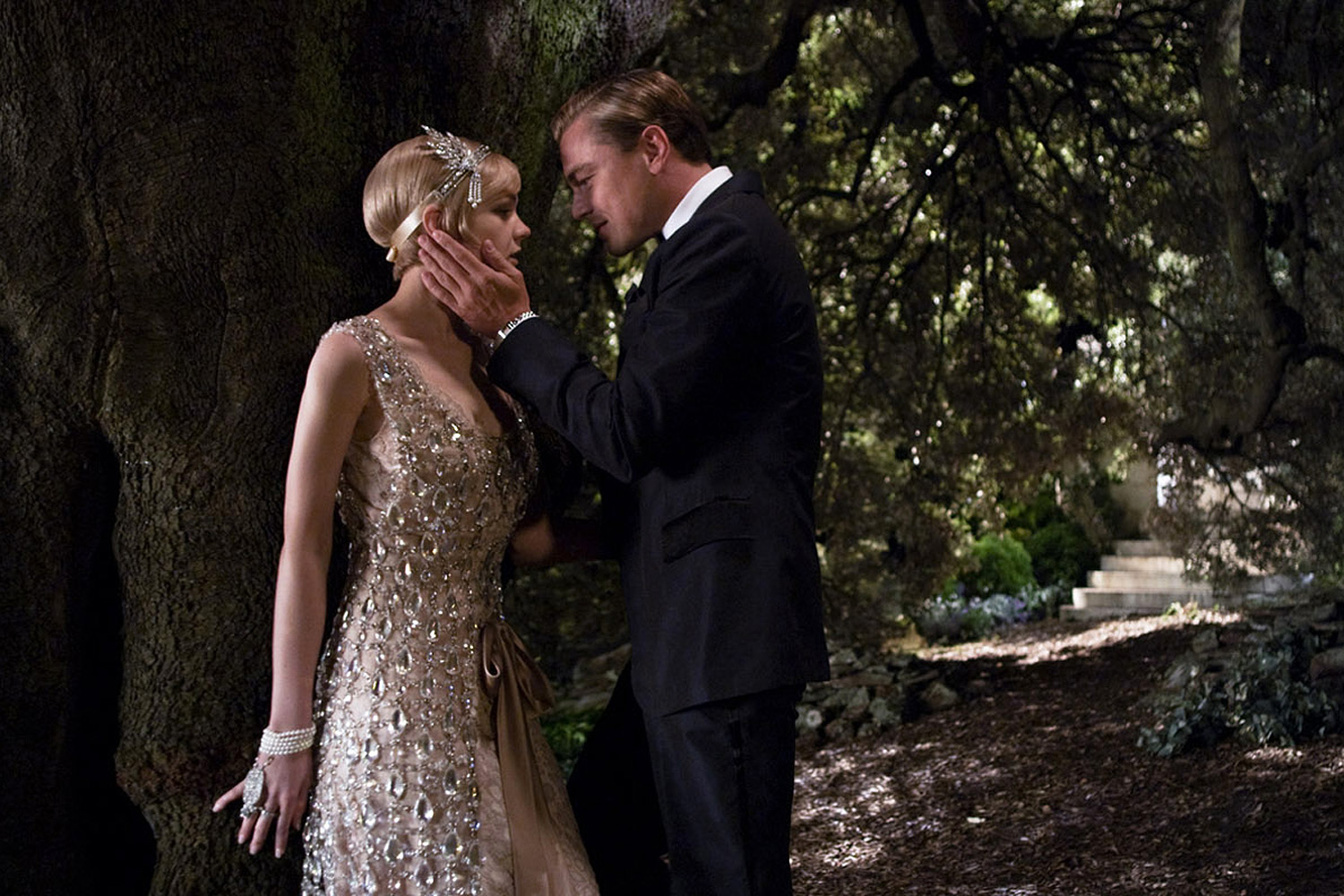
Baz Luhrmann’s The Great Gatsby is a rollicking, cinematically frenzied and inconsistent take on F. Scott Fitzgerald’s seminal novel.  It is pop art done in the most extreme way, using what it likes from the source material’s Roaring Twenties setting and glossing over the rest with Lana Del Ray and Beyonce.  This is why as an adaptation of what many consider to be “The Great American Novel” it fails miserably, but as a movie it is far from miserable.

Fitzgerald’s novel is not a work of maximalism like this movie is.  It is the story of parties ending, and of dreams and identities being born, shifting and dying.  Luhrmann may have many of the more beautiful passages flash on the screen in fancy font as Nick Carraway (Tobey Maguire) narrates, but he is clearly more in tune with the party than the language or the themes of the source material.

Continue reading

REVIEW: Iron Man 3

Iron_Man_3_screenshot_620x380

Iron Man 3
Directed by: Shane Black
Written by: Drew Pearce & Shane Black (screenplay), Stan Lee, Jack Kirby, Don Heck and Larry Lieber (comic book)
Starring: Robert Downey Jr., Gwyneth Paltrow, Ben Kingsley and Guy Pearce

Gone are the good old days, when a libertarian billionaire could save America (and its pathetic government) on his own.  In Iron Man 3, Tony Stark (Robert Downey Jr.) is an anxiety-prone mess in the aftermath of the apocalyptic showdown in last summer’s The Avengers.  It rarely connects on an emotional level, but this latest installment’s grandiose showdowns and operatic villains take Iron Man in darker and more interesting places, if nowhere nearly as interesting as that other billionaire superhero.

Director Shane Black tries admirably to spin this third installment into something that jabs at media image and terrorism, but it is ultimately overshadowed by predictability.  Its central villains, a nerd-turned-vengeful-scientist (Guy Pearce) and a baritone, bearded extremist (Ben Kingsley) become comical by the end, the latter intentionally and the former because of overacting and bad CGI.

Continue reading

REVIEW: Pain & Gain

film-pain-570

Pain & Gain
Directed by: Michael Bay
Written by: Christopher Markus & Stephen McFeely (screenplay), Pete Collins (magazine articles)
Starring: Mark Wahlberg, Dwayne Johnson, Anthony Mackie and Tony Shalhoub

Pain & Gain was made for around $26 million, an indie budget for a blockbuster action addict like Michael Bay.  After the trifecta of mind-numbing bombasity that was his take on Transformers, it can be hard to remember his good old days, when his movies were just okay.  This movie helps with that.

Bay’s latest tells the (kind of true) story of the Sun Gym Gang, three bodybuilding thugs from the ’90s who kidnap an arrogant client and torture him until he signs over everything he has to them.  Pretty much everyone in this movie is either stupid or unlikable, except for maybe a wiser-than-thou retired detective played by Ed Harris.

Continue reading

REVIEW: To the Wonder

04-26wonder_full_600

To the Wonder
Directed by: Terrence Malick
Written by: Terrence Malick (screenplay)
Starring: Ben Affleck, Olga Kurylenko, Rachel McAdams and Javier Bardem

To the Wonder is the quickest turn-around of the legendary auteur Terrence Malick’s career, coming out a little less than two years after 2011’s The Tree of Life.  For a director who famously took 20 years after 1978’s Days of Heaven to resurface, that is quite a 180.  This is also significant when examining this latest film because, though it contains moments as transcendent and beautiful as anything he’s ever done, those moments are trapped inside many less significant ones.  It doesn’t feel fully formed, and though it’s by no means lazy or even bad, several parts feel out of place and sloppy.

Malick’s camera, aided by the infinitely gifted cinematographer Emmanuel Lubezki, washes over any landscape with lightness and grace, tilting, panning and maneuvering around endlessly twirling and writhing bodies.  He speaks a language of pure cinema, enhancing each gesture and glance with a swell of music and a matching camera movement, and then using his trademark narration to an almost entirely expressionistic effect.

Continue reading

REVIEW: Oblivion

oblivion-skip-crop

Oblivion
Directed by: Joseph Kosinski
Written by: Joseph Kosinski, Karl Gajdusek and Michael Arndt (screenplay), Joseph Kosinski and Arvid Nelson (comic book)
Starring: Tom Cruise, Olga Kurylenko, Andrea Riseborough and Morgan Freeman

Machines are typically a main enemy in science fiction narratives, often stand-ins for the mechanical processes of fascism or bureaucracy .  This is true both in front of and behind the camera in Joseph Kosinski’s Oblivion, a dull, overdone futuristic movie that tries amicably to be more than the Tom Cruise vehicle it ultimately is.  It is so bogged down by needless special effects excess that its fine polish glosses over any semblance of life.

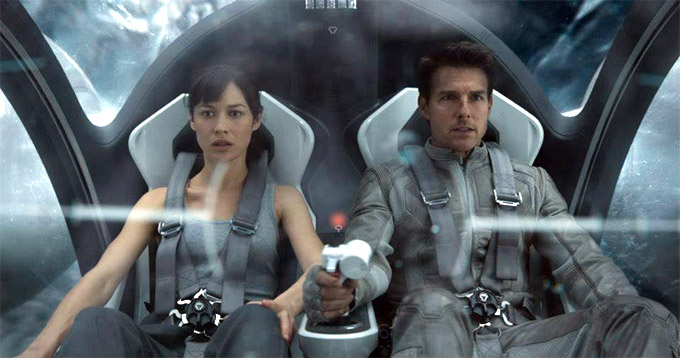
Set in 2077, Oblivion at first follows Jack (Cruise) and Victoria (Andrea Riseborough), two engineers who repair drones that guard resource mining operations on what’s left of Earth.  Of course the drones turn out to be evil, and Jack is forced to choose between helping those he once helped destroy (a pack of human survivors led by Morgan Freeman) or stay the course.  It isn’t really much of a choice, and neither the script nor the camera captures any rebellious spirit or sense of urgency.  There are a some well done firefights and amusing exchanges between Cruise and Freeman, but Kosinksi sacrifices all major opportunities for political commentary to indulge in them.

Continue reading

REVIEW: Room 237

room-237-poster

Room 237
Directed by: Rodney Ascher
Starring: Bill Blakemore, Geoffrey Cocks, Juli Kearns and John Fell Ryan

There are no talking heads in Room 237, at least not in the traditional documentary sense. Using footage from the movies, mostly Stanley Kubrick ones and mostly scenes from The Shining, Rodney Ascher creates an obsessive, absurd paean to the movies.  He weaves together five intensely different theories about Kubrick’s 1980 horror staple, all of them bizarre sometimes to the point of ridiculousness.

We are given the names of these people at the beginning of the movie when they each speak for the first time, and then we don’t see them again until the credits.  Ascher rotates between their explanations of what is really going on inside The Shining with the slyness if not the total condescension of a reality show host.  One man believes there are hidden messages about the genocide of Native Americans, another sees a heavily layered Holocaust subtext.  By far the most bizarre of these theories, though, is that of Jay Weidner, who believes that The Shining is Kubrick’s confession to helping the U.S. government fake the Apollo 11 Moon landing.

Continue reading

REVIEW: Searching for Sugar Man

searchingsugar

Searching for Sugar Man
Directed by: Malik Bendjelloul
Written by: Malik Bendjelloul

Searching for Sugar Man is about both lost treasure and a missing pirate, at least at first glance.  Malik Bendjelloul’s documentary tells the story of Rodriguez, a Detroit musician whose albums bombed in America but became more popular than Elvis’ music in South Africa during apartheid.  He didn’t know this until later, when it was too late to collect the royalties.

Before Rodriguez makes his first modern day appearance in Sugar Man, he is built up into a misunderstood musical genius with talent on the level of Bob Dylan who seemed to vanish into thin air after his music didn’t take off.  Songs from his two studio albums are paired with scenic, often somber shots in both Detroit and Cape Town.  This transforms the movie into more of a tone poem than a straightforward retelling of events that largely happened in the ’90s.

Those shots, especially the ones in Detroit, answer the biggest question I had during the movie: Why tell this story?  Why now?  It is interesting, and making it unfold like a kind of mystery after the initial set-up does distract from the fact that most of the questions about Rodriquez’s identity were answered almost 20 years ago.  When he finally does surface and explain that he went to South Africa and performed concerts when he found out he was famous, the movie started to feel entertaining and emotional but ultimately pointless.

What showcasing Detroit does for the movie, though, is make it timely.  It is a city whose reputation as a labyrinth of modern decay and blue collar grit makes Rodriguez’s story resonate and enhances the story’s meaning.  The tracking shots of him clumsily shuffling down streets often covered in snow show that even though on the other side of the world he is more famous than almost any other artist, here he is just another man.

Between those often elegiac city shots are fairly standard talking head Interviews with his daughters, friends, fans from South Africa and music producers attesting to his talent.  They build a portrait of an artist with that almost undefinable air of mystery; before it was discovered that he was alive, rumors that he committed suicide by lighting himself on fire on stage circulated. When he finally does arrive, more wrinkled than in the photos but no less charismatic, it’s easy to see how he still confounds and mesmerizes the people in his life.

Rodriguez is often described by the other people in the movie as a generous soul who broke his back his entire working life for his family but also stressed the importance of art.  His music is often political, with songs about working class struggle interspersed with the more personal and romantic tunes.  It comes without the hypocrisy that follows more commercially successful musicians with blue collar roots, too; unlike them, he doesn’t make millions singing about the poor.

Grade: B