Our favorite movies of 2019

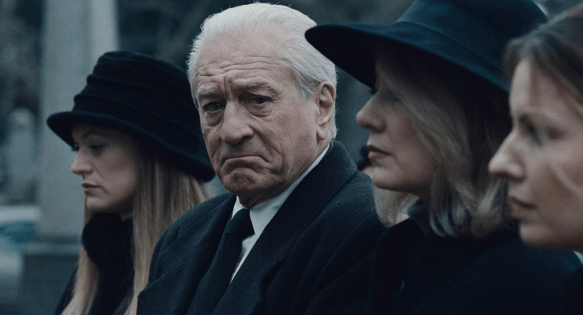
1. The Irishman- Martin Scorsese’s mob epic is an electrifying and ultimately devastating portrait of memory and moral decay. The decade-spanning tale is told from the perspective of Frank Sheeran (Robert De Niro), a meat truck driver who lies, robs and kills his way up the mafia ladder before finding himself as a right-hand man to the infamous union leader Jimmy Hoffa (a livewire Al Pacino). De Niro, Pacino and Joe Pesci (who came out of retirement to deliver perhaps his finest performance here) play their characters at every age through the movie, which required the use of a de-aging technology to make them appear as younger men. The transformation is particularly stunning for De Niro, not only because he convincingly plays the central character from ambitious family man to his later days alone in a nursing home, but because it adds to the unreliability of his character’s point of view. No matter how effective the de-aging is, you’re always looking at De Niro, and The Irishman ultimately comes off as the tale of an old man rummaging through his past for scraps of glory and stumbling onto emptiness.
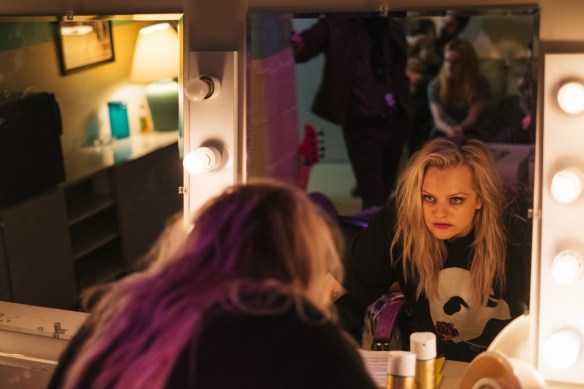
2. Her Smell- Elisabeth Moss continues to prove she’s one of the greatest actresses of her generation in Her Smell, her third and (so far) most electrifying collaboration with writer/director Alex Ross Perry. Divided into five extended scenes, each a day in the life of punk rocker Becky Something (Moss), Her Smell is a story of addiction and recovery that is by turns claustrophobic, ruthlessly uncomfortable and, ultimately, incredibly moving. The scene where a newly sober Becky sings Bryan Adams’ “Heaven” to her young daughter is one of the single most shattering of the year.

Continue reading

Our favorite performances of 2019

1. Elisabeth Moss- Her Smell- The collaborations between Elisabeth Moss and director Alex Ross Perry have yielded some of the most memorable performances of the last several years, but she reaches electrifying new heights as the punk rocker Becky Something in his latest film. Her Smell is a story of addiction and recovery that is by turns claustrophobic, ruthlessly uncomfortable and, ultimately, incredibly moving. Much of the movie is structured around the horrifying anticipation of what Becky might do next, and Moss’ chaotic physicality and manic line readings build and build until the movie quite literally can’t take it anymore. In the second half, when a newly sober Becky sings Bryan Adams’ “Heaven” to her young daughter, the full emotional scope of Moss’ brilliant performance comes into focus.

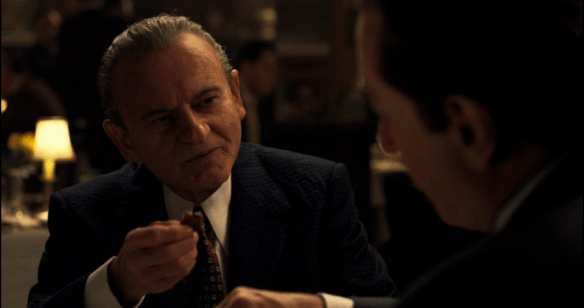
2. Joe Pesci- The Irishman- Joe Pesci came out of retirement to deliver perhaps his greatest performance in Martin Scorsese’s mob epic. As Russell Bufalino, the head of a powerful crime family, he holds a quiet power over every scene he’s in. That power is sometimes used to devastating effect, calling attention to moments where the fear and reverence he inspires professionally have no effect, like when he tries to impress an associate’s young daughter.

Continue reading

Short takes: Richard Jewell, Dark Waters & A Beautiful Day in the Neighborhood

Richard Jewell- Clint Eastwood’s latest, about the security guard caught up in the Centennial Park bombing during the 1996 summer Olympics in Atlanta, is infuriating on several levels. It is a perfect fit for late-period Eastwood, a study of a man who performed an act of everyday heroism only to wind up entangled in sinister, complex bureaucracies. Richard Jewell (Paul Walter Hauser) was an AT&T security guard who was hailed as a hero after helping clear people away from the bomb, only to then be vilified after it leaked that he was being investigated by the FBI as a prime suspect in planting the bomb.

The Jewell of Eastwood’s film is reverent of law enforcement to an increasingly uncomfortable degree, and Hauser is devastating when conveying the conflicting emotions at play as his character tries to be deferential to the authorities as they openly mock and try to lock him up. Equally devastating is Kathy Bates as Jewell’s mother Bobi; she is great at showing how uncomfortable and horrified the character is with the intrusiveness of the investigation and the media spectacle.

Richard Jewell has generated quite a bit of controversy for its portrayal of Kathy Scruggs, the late Atlanta Journal-Constitution reporter who broke the story about Jewell being a focus of the FBI investigation into the bombing. Olivia Wilde gives an energetic, determined performance as Scruggs, but the role is incredibly poorly written and falls prey to an unsettling trope about on-screen female journalists sleeping with their sources. As a study of a man in the claustrophobic death grip of weaponized governmental institutions, Richard Jewell is exceedingly effective. When it ventures outside of that story, though, it is decidedly weaker. Grade: C+

Continue reading

Our favorite movies of the 2010s

Every “best of” list is defined by what’s absent, both to the people who read them and those who assemble them. The act of whittling them down, of deciding to choose one movie over another, can be difficult. What’s equally daunting are the hundreds of movies I’d have liked to see for the first time that could have made this list, or the ones I saw for the first time and didn’t realize I loved. I look forward to discovering them in the years to come and tweaking my list on Letterboxd accordingly. Looking back on the 2010s from its final days, these are the movies that left the biggest impression. Consider this list a snapshot. Tomorrow it might have turned out differently. -Matt

1. The Wolf of Wall Street- The best film of the last 10 years is Martin Scorsese’s 3-hour epic of depraved greed. The Wolf of Wall Street is both a grotesque creation and the decade’s funniest film. Tracing the turbulent rise and fall of the stockbroker Jordan Belfort (Leonardo DiCaprio), Scorsese uses his insatiable desire for money to expose a rot at the heart of American society. The movie is designed from the ground-up around the everyday excess and debauchery of Belfort and his colleagues at the New York firm Stratton Oakmont. In their offices, Scorsese portrays an anarchic space of endlessly screaming executives, where a marching band plays in their underwear, and Belfort’s partner in crime (an exceptional Jonah Hill) eats a nerdy broker’s goldfish and then fires him.

This is also the place where Belfort goes on a series of extended, frightening rants, a Quaalude king to a group of privileged minions. “There is no nobility in poverty,” he tells them in one scene. “I have been a rich man and I have been a poor man, and I’d choose rich every fuckin’ time.” As brilliantly embodied by DiCaprio, Belfort is a seething ball of rage produced by sexual frustration. He can have anything he wants, and often does, but when confronted with the intimacy of a woman, he orgasms in 11 seconds. The Wolf of Wolf Street is a necessary battle cry from artists at the absolute peak of their power. It’s a boundlessly confident achievement, and a bombardment of pure cinema.

2. Carol- From the moment Therese Belivet locks eyes with Carol Aird across a busy 1950s New York City department store, that’s that. Their first look is a barrage of confusion and longing, of instant connection stifled by societal codes.Therese (Rooney Mara) and Carol (Cate Blanchett) spend much of the rest of Todd Hayne’s immaculate, sensuous film trying and sometimes failing to express how they feel about each other. For Therese specifically, attraction to another woman is not something she seems to have given herself permission to consider, until now.

What Carol does so beautifully, what makes it the most ravishing romance this side of In the Mood for Love, is that it slows down to examine the minute gestures, to chronicle every touch, every glance that leads to their love affair. The moment where Carol looks over her shoulder while picking out a Christmas tree and Therese snaps a photo of her seems like it has always existed. It’s one of many that took my breath away.

Continue reading